For the last couple of months, Singapore has been dealing with the discomfort of the haze. Headaches, suspension of outdoor activities, nausea, irritation, depression, and increased frequency of respiratory disorders are some of the most common consequences of the short but painful haze event. Air pollution is a threat that most of the 21st-century urban population endures daily. The World Health Organization (WHO) reported this threat in 2014 (cf. map below). Once again, the developing countries are suffering the most. As a consequence, in cities, people have the daily reflex to look at the Air Quality Index (AQI) in the same way as they look at the weather forecast in order to schedule their days. These people have a good awareness of the issue; however, most of the people do not.
Unfortunately, this is only the beginning.
In the best scenario, the COP21 will be a success and we will get a commitment from all major nations to work towards a scenario where the global mean temperature will increase by 2 degrees centigrade (vs. 4 degrees with the current trend). Let’s face it, an increase of 2 degrees will mean that the overall quality of air in our cities will decrease even further in the coming years.
Already in 2012, the Organization for Economic Cooperation and Development (OECD)projected that by 2050 , air pollution will be the top environmental cause of mortality worldwide , surpassing dirty water and lack of sanitation.
As a consequence, in July 2014, the United Nations Environment Assembly made improving air quality a top priority for sustainable development and highlighted the growing concern for urban population.
More recently, the UN Sustainable Development Goals (SDGs) officialized a stronger focus on Air Quality; in its 3rd Goal “Ensure healthy lives and promote well-being for all at all ages,” in its 11th Goal “Make cities and human settlements inclusive, safe, resilient and sustainable,” and finally in its 13th Goal “Climate Action,” where the UN calls for adaptive technologies and ways to mitigate the risks associated with a degradation of our atmosphere.
Air Quality Monitoring Systems
Independent and reliable outdoor air quality information is now available (through governmental agencies' websites or independent third-party Apps) and allows us to understand better the environment we live in. Pollutant Standards Index (PSI) is a well-accepted indicator, and there is now a broader monitoring of our atmosphere with CO2 and air hazardous substances concentration measurements. Today the Air Quality Index (AQI) measured in our cities focuses on 6 substances: particulate matter (PM10), fine particulate matter (PM2.5), sulfur dioxide (SO2), carbon monoxide (CO), ozone (O3), and nitrogen dioxide (NO2).
Indoor Air Quality
There is a common agreement that staying indoors and avoiding outdoor activities will protect you from air pollution. For example, my 4-year-old son had to stay inside his school for all his activities for a month due to the haze issue. But while we have more and more access to reliable measurements of outdoor pollution, we are still lacking data about Indoor Air Quality.
Recently, a new study from the National Institute of Environmental Health Science (NIEHS) and Harvard shows that cognitive functions were “significantly better in Green+ building conditions compared to the Conventional building conditions..... These findings have wide-ranging implications because this study was designed to reflect conditions that are commonly encountered every day in many indoor environments.” In this study, maintaining a good Indoor environmental quality (IEQ) is associated with maintaining the right level of CO2 and Volatile Organic Compounds (VOCs) and/or with a good outdoor air supply. To put it in a nutshell, the study shows that having the right indoor air quality will boost the productivity and creativity of the occupants (up to 100% gain!).
Indoor Air Quality vs. Outdoor Air Quality
In October, I met with the founder of uHoo (an IoT start-up working on indoor air quality monitoring systems) named Dustin Jefferson Onghanseng. He shared with me the results of an experiment uHoo did during the IoT conference held in Singapore on the 22nd and 23rd of September. uHoo's team measured during 2 days (during the haze issue) the indoor air quality (PM2.5 level) at the venue (building designed in the 90s).
The results can be seen in the graph below. I added the green curve that shows the outdoor pollution measurement (PSI) provided by the Singaporean National Environment Agency (NEA). Due to the haze, we can assume that it is, in fact, the density of PM2.5 that is measured. The blue curve is the PM2.5 level measured by uHoo (it is the average value of 4 data points measured in the building).
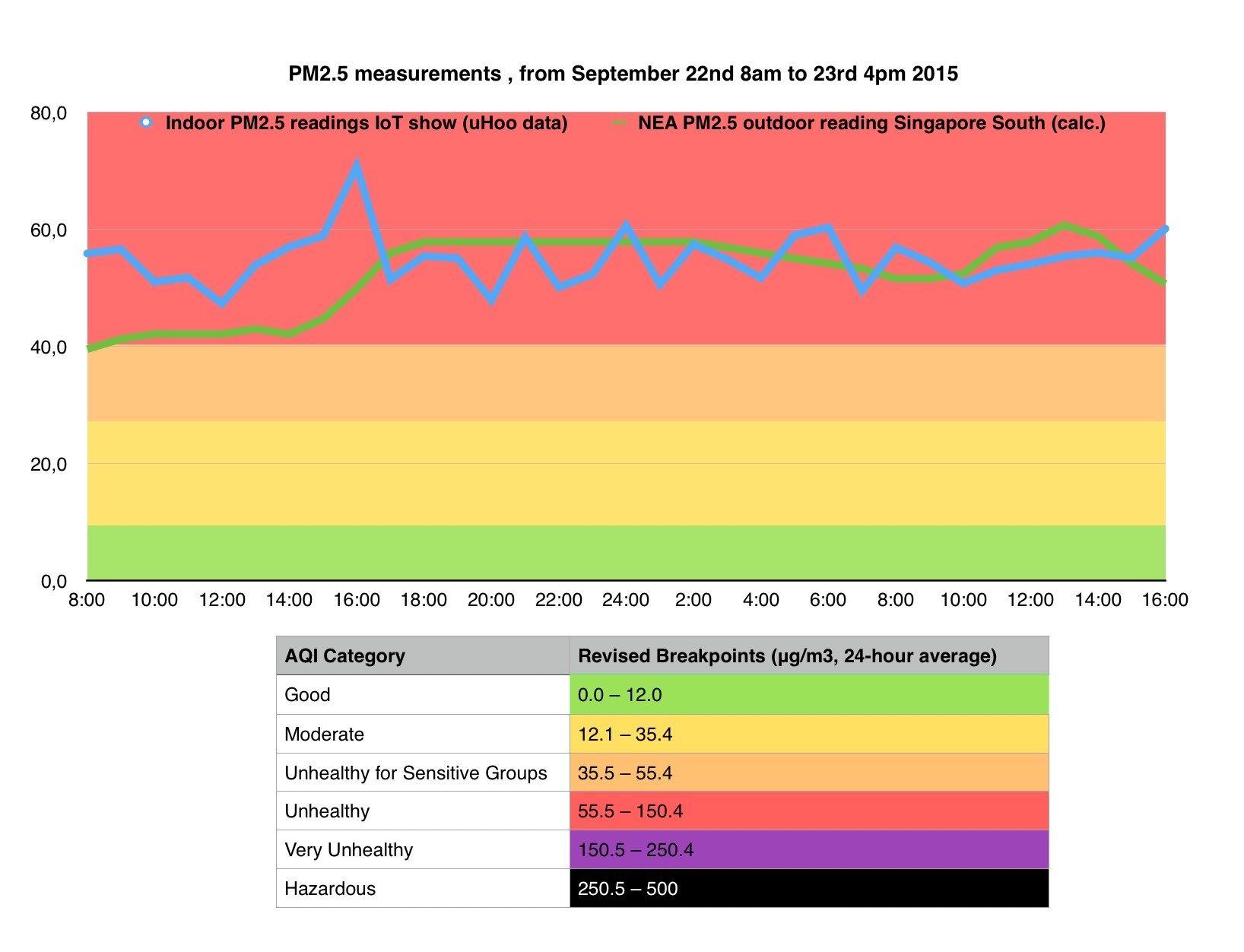
The main takeaway from the graph is that the building does not protect us effectively from air pollution. The indoor air reached the same level of pollution as the outdoor one; the indoor air was unhealthy.
How come a modern building cannot do a better job at protecting its occupants?
The data shows clearly that the indoor air quality is poor. There is also a real-time correlation between the outdoor PSI measured for Singapore South on the 22nd and 23rd and the indoor value measured in the building.
We can assume the following:
- The polluted outdoor air enters and contaminates the building.
- The building infrastructure (active and passive equipment) does not act as a filter and so does not protect the occupants (it reaches the same level of PSI as outdoor level).
- The building HVAC system is able to partially improve the indoor air quality, most probably thanks to the filters installed in the HVAC system (the pollution does not build up constantly over time in the building, and the blue curve goes down several times at recurrent time intervals).
- The building HVAC system is not able to completely protect the occupants of the building (we are still at unhealthy level for PM2.5). The blue curve goes up several times after going down, maybe due to the supply of outdoor air inside the building by the HVAC system.
Unfortunately, there is not enough data from this experiment alone to get a full understanding of the phenomenon, and it would be interesting to measure:
- How other air quality indicators (CO2, etc.) evolve during the experiment.
- How fast does the pollution build up in the building once the outdoor air reaches an unhealthy level.
- How long does it take to get back to healthy level inside the building after the outdoor level resumes to a healthy level.
- What is the Minimum Efficiency Reporting Value (MERV) of the filters used in this building.
- How other buildings would react in a similar situation.
Today most of the HVAC systems are designed to optimize temperature, humidity, CO2 level, air velocity, and energy consumption. Very rarely is air quality (in a broad sense as with PSI) a factor used for the optimization of the building management system operations. To make it worse, in our case, the assumption used for BMS design and control loop is that an increased supply of outdoor air will improve the indoor air quality of the building.
Shouldn't there be smarter ways to use the building's assets to better protect the occupants from air pollution?
How Can We Improve?
We are still in the infant stages of awareness and of technology developments. In order to progress faster, we need, again, a collaboration of the private and public sectors. The following actions can help:
- Organize large-scale experiments (longer measuring time, more locations) in order to better understand the correlation between indoor Air Quality, building infrastructures, and outdoor pollution.
- Promote active monitoring of indoor air quality , especially for buildings that host sensitive populations (healthcare facilities, schools, sports arenas, elderly care centers, etc.). A first good step would be for governmental agencies or solution providers to monitor the air quality in their own buildings and share the data with the public / science community.
- Fund or support R&D programs to investigate how we could use the building's active and passive equipment, new technological architectures like the Internet of Things (IoT), to improve indoor Air Quality in our buildings.
- Change recommendations for sensitive groups to promote more conservative behavior in non-monitored buildings during peak air pollution events.
- Create related working groups with associations focused on "Green" buildings (e.g., U.S. Green Building Council’s Leadership in Energy and Environmental Design (LEED®)) to investigate how to address increased outdoor air pollution in building designs for the coming years.
For more information on uHoo, please visit and register at uhooair.com.
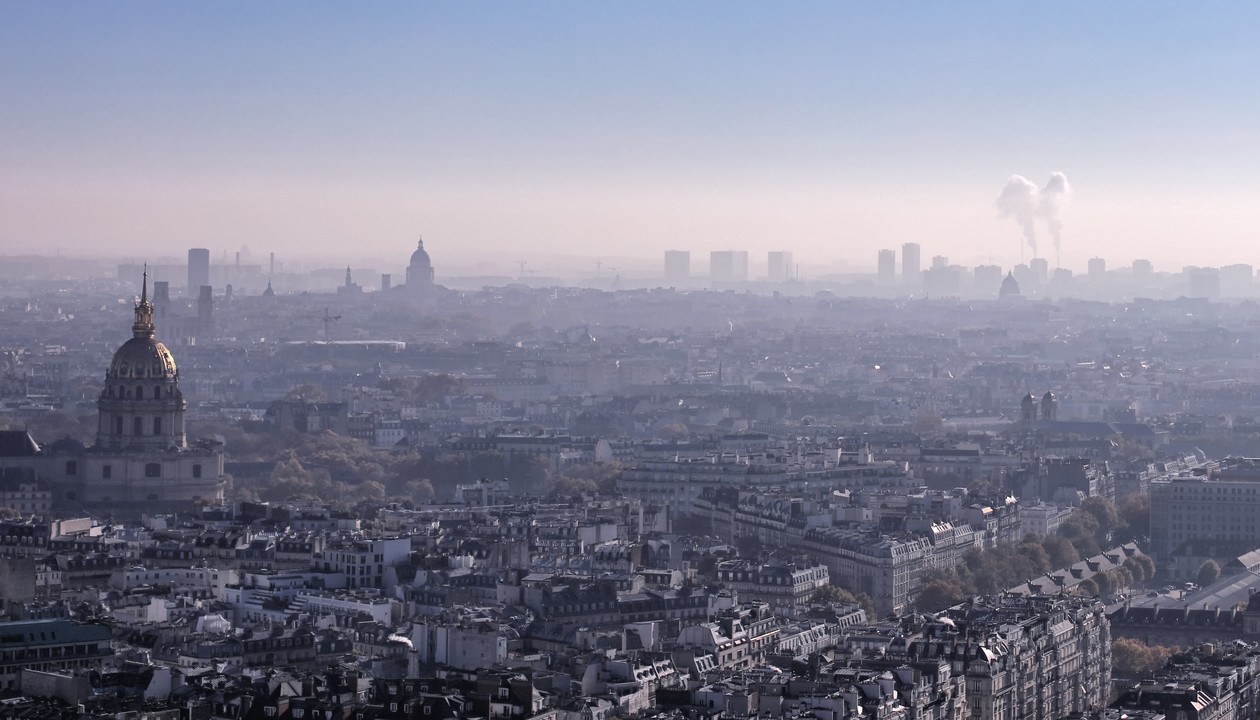
Ps: For this post, I chose a picture of sunny Paris, the most beautiful city in the world. My title refers to the dialogue of "Hotel du Nord" by Arletty. This scene was shot in 1938 in Paris’s 10th district, close to where the attacks took place on November 13, 2015. Paris is immortal, and terror shall only reinforce our will to build a better place to live in for our children. The COP21 will take place in Paris, and our leaders will have another opportunity to make a difference for them. Social progress shall not be stopped.
Update on the 27th of January 2016: Singaporean authorities just announced a major program to install air purifiers in all schools. This is very good news for the health of the young ones and a clear sign that authorities take the risk associated with outdoor and indoor air pollution very seriously. A fantastic step to mitigate the risk, but let’s work on root causes!