
IoT (Internet of Things) projects can be very challenging for an organization due to the large scope of competencies required. In the past, companies often focused either on HW products, or SW products, or services delivery. But in order to build IoT solutions, companies need to acquire and assemble an incredible set of talent. In this post, I describe the main competencies required in order to design, industrialize, and operate an IoT solution.
IoT refers to different architecture typologies. So the set of competencies you need to assemble depends on the architecture(s) you select and the place in the value chain/ecosystem you want to hold. For this list, I considered the most complex situation where you would like to offer a full end-to-end solution (multi-devices to cloud). This is the most challenging from an engineering/operation point of view but it is the most rewarding in terms of value creation.
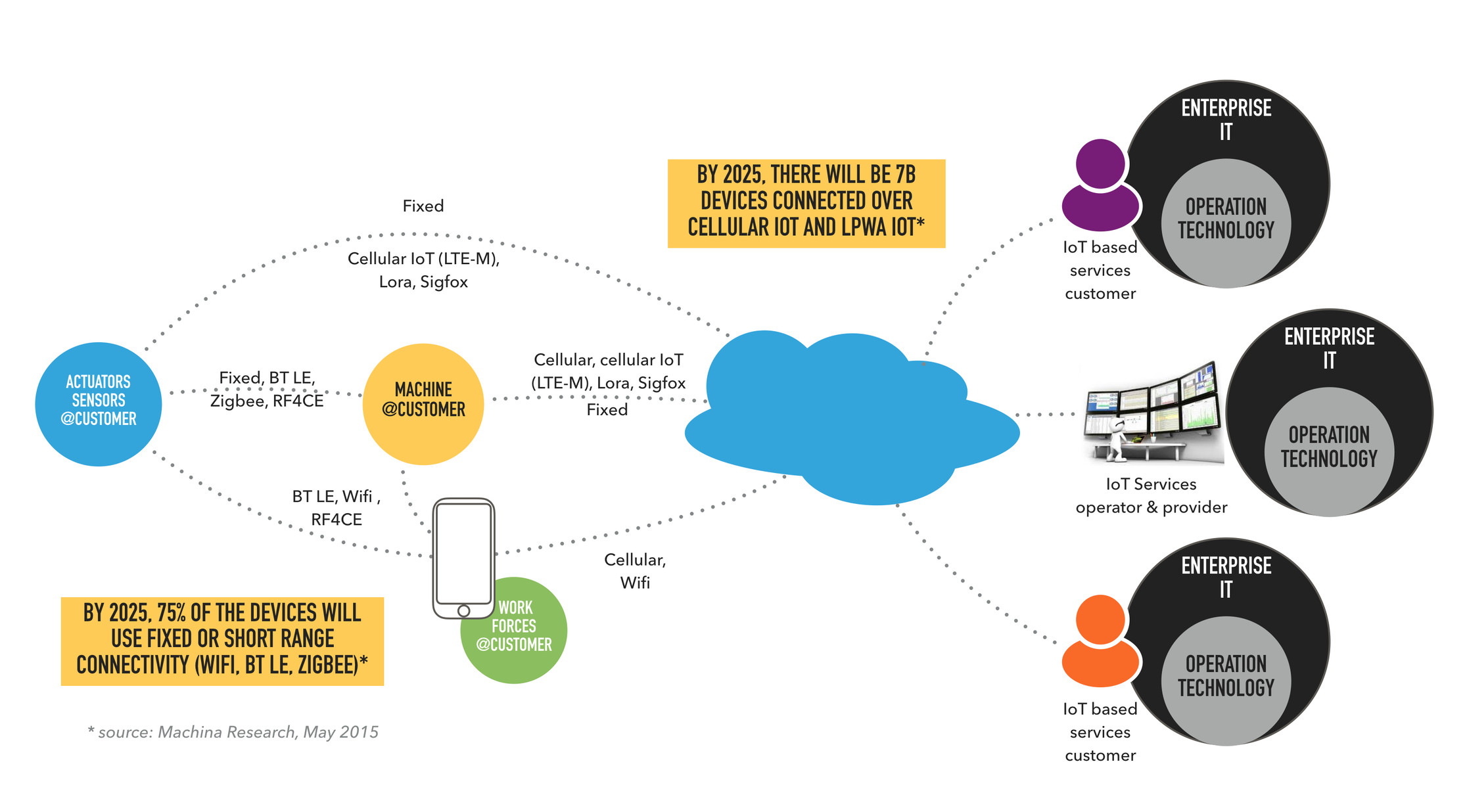
If you are the founder of an IoT start-up, the engineering head of an MNC, or the HR leader supporting them, then this list of 20 competencies could quickly become your nightmare. So I would recommend first evaluating the competencies that already exist in your organization, the IoT architecture(s) you aim at, the latent value associated with IoT for your business, the expected number of connected devices, your budget, and your timeline. Scoping and selecting your first IoT projects is very important and these should lay a progressive learning path in front of your engineering team.
If you are starting your IoT journey, then you should be obsessed with the search for the MVP (minimum IoT viable product) in order to manage the risk correctly for your organization.
This list comes on top of the critical APPLICATION knowledge that would be specific to your industry, to the problem you want to solve, to the application you have in mind for the IoT technology, and to your targeted customers. Building application knowledge in your engineering team should be one of your top priorities. It is indeed the best way to ensure that the creativity of your team is put to the best interests of your customers and so ensure the best practical use of technology.
Top 5 competencies to build the right IoT solutions
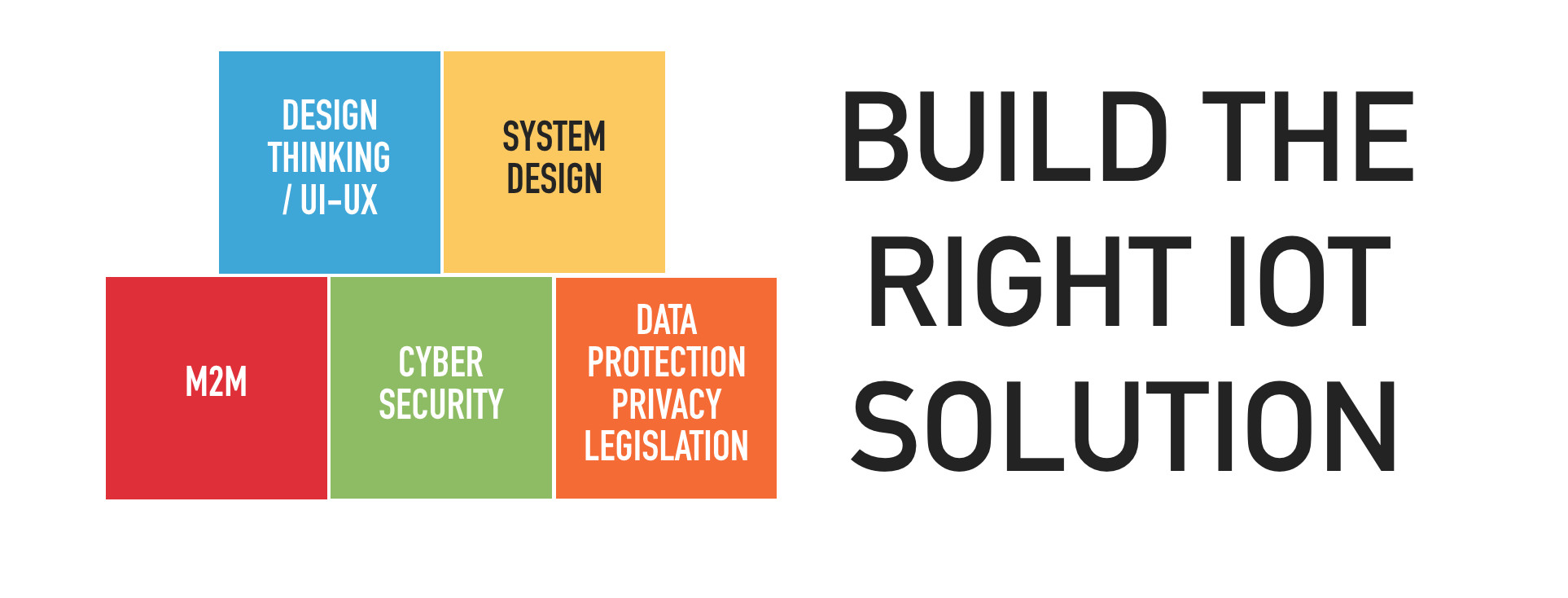
- Design Thinking / UI-UX design: Helps you to focus on the customer's job-to-be-done and customer experience, seek for a minimum viable product, and use technology creatively and practically. This is relevant in both industrial and consumer IoT applications. It's essential to involve designers early in the ideation process and give them a strong mandate.
- System design: An end-to-end IoT solution comprises multiple HW and SW components. Designing a reliable, scalable, and maintainable solution requires understanding how each block will interact or interfere with the others.
- M2M (telecom, network, device management): The choice of connectivity technology is strategic and depends on various factors. Connectivity is a core part of any IoT solution and includes device management, messaging technologies, SIM card management, authentication, encryption, etc.
- Cybersecurity: Security principles and mechanisms should be built-in. Hiring security experts to perform security assessments and intrusion tests is recommended.
- Data protection and privacy legislation: Data protection and privacy legislation vary by country. It is important to comply with these regulations and integrate them into your system design.
Top 5 competencies to build IoT solutions right
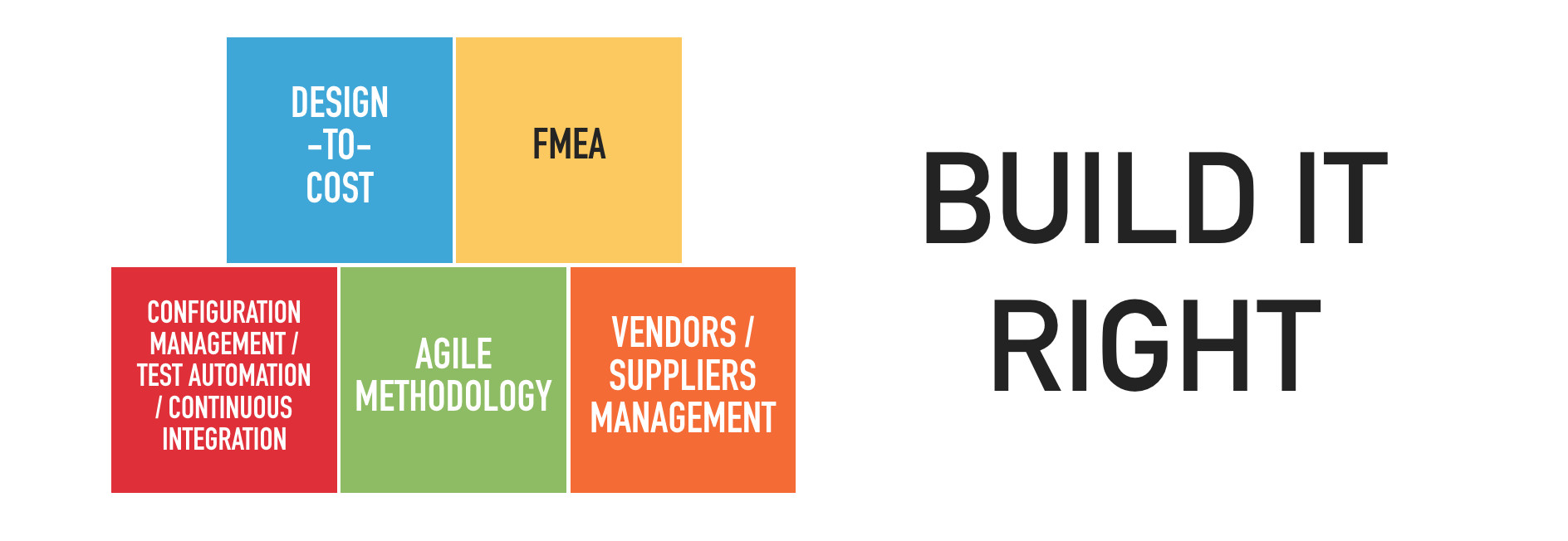
- Agile methodology: When the direction is foggy, Agile is the best approach. Agile methodology helps teams respond to unpredictability through iterative work cadences, known as sprints.
- Design-to-cost: Sixty to seventy percent of a product's cost is committed during concept development. Design-to-cost maximizes ROI for IoT investments.
- Failure Mode and Effect Analysis (FMEA): FMEA is a powerful tool to build-in quality and robustness. Good engineers always think about degraded modes, self-recovery mechanisms, maintainability, and data integrity.
- Configuration management / Test automation / Continuous integration: Make sure basic quality/development tools are in place to support the SW engineering team.
- Vendors / suppliers management: Selecting, forming, and managing technology partnerships are crucial in building IoT solutions.
Top 5 competencies to build IoT devices
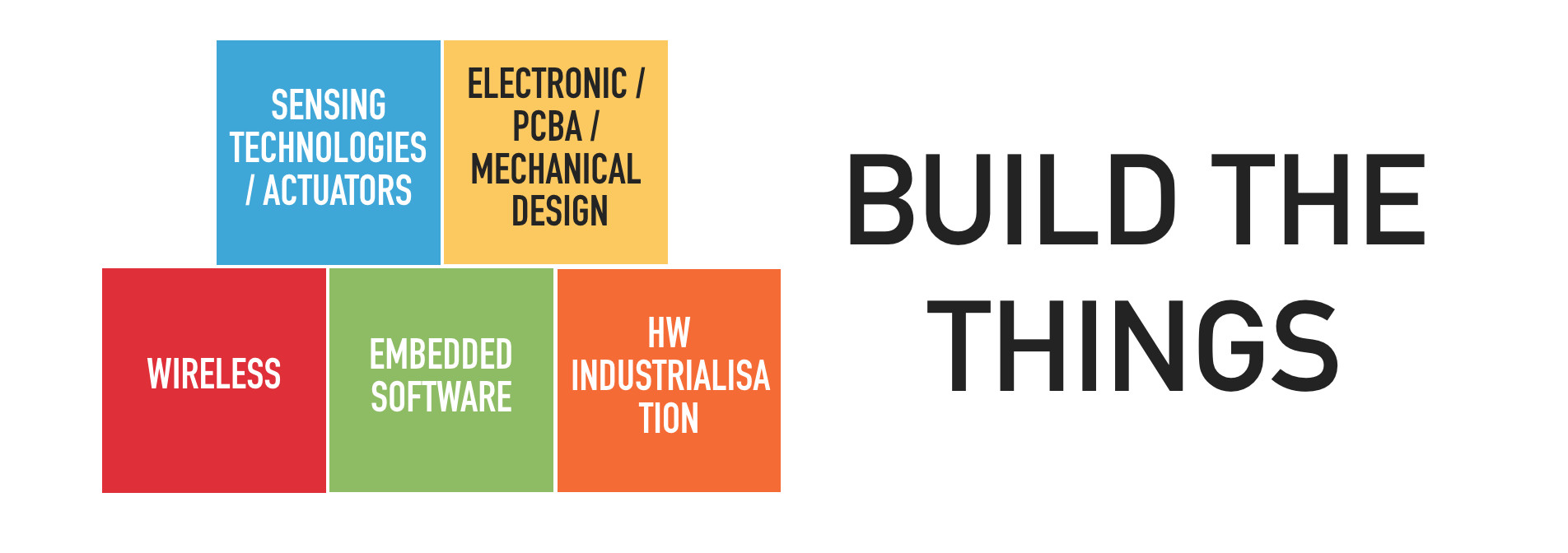
- Sensing technologies / actuators: Sensing technologies and actuators play a key role in value creation for any IoT solution.
- Electronic / PCBA / Mechanical design: Smart Things are made of electronics. Customers appreciate high-quality, aesthetically pleasing products.
- Embedded software: Power consumption requires constant attention from HW and SW developers. ARM, Linux, Java, and OSGI are popular for machines.
- Wireless: Local connectivity is often required for multi-device systems. Security, antenna design, power consumption, and certifications are typical challenges in implementation.
- HW industrialization (manufacturing, tooling, supply chain): High product quality distinguishes a proof of concept from a real product/business.
Top 5 competencies to build IoT services
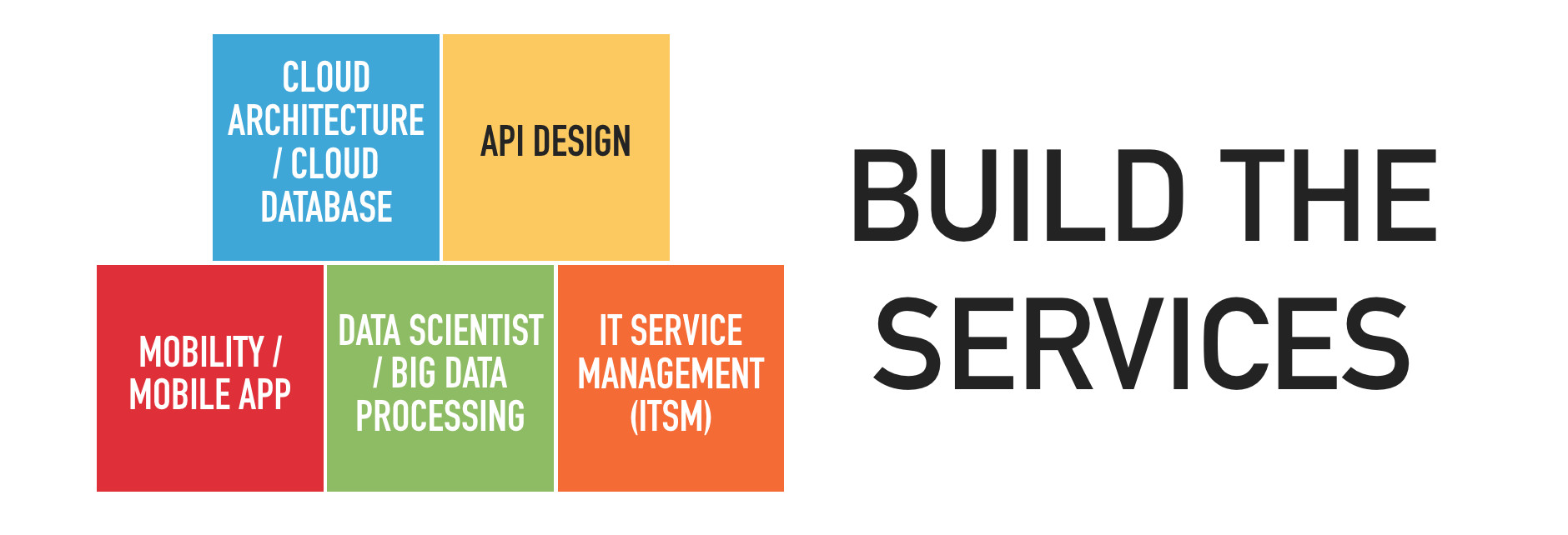
- Cloud architecture / Cloud database: With various cloud strategies available, selecting the right providers and managing them effectively is crucial.
- Data scientist / Big data processing: A data scientist helps extract maximum value from data, working with the business team to identify new value creation methods.
- Mobility / Mobile APP: Mobile devices should be a primary area of research to enhance the UX-UI of your solution, especially as customers expect regular updates.
- API design / management: APIs play a key role in enabling collaboration and enhancing solution market value.
- IT Service Management (ITSM): IoT solutions often require service-oriented business models. ITIL is widely accepted for ITSM.