Half of the Fortune 500 will not exist in ten years, say c-suite executives. Corporate Venture is at an all-time high. Deep Tech start-ups look with envy at established firms’ assets. In this post, I will explain why corporate facing digital disruption need to enhance their innovation strategy by creating complete autonomous teams working exactly like start-ups. I will also highlight the unique advantages of these autonomous teams / corporate start-up studios in successfully pursuing breakthrough and disruptive innovation as they follow a design and data-driven innovation journey.
Digital innovation mapping
To build an effective innovation strategy, it is important to map the different types of innovation. Abernathy & Clark, Clayton Christensen, Robert E. Johnston, J. Douglas Bate, and Greg Satell made significant contributions to this topic. The most relevant measure of innovation level or intensity is evaluated against each firm’s referential by examining changes introduced in both the technology/application and business model/market dimensions.
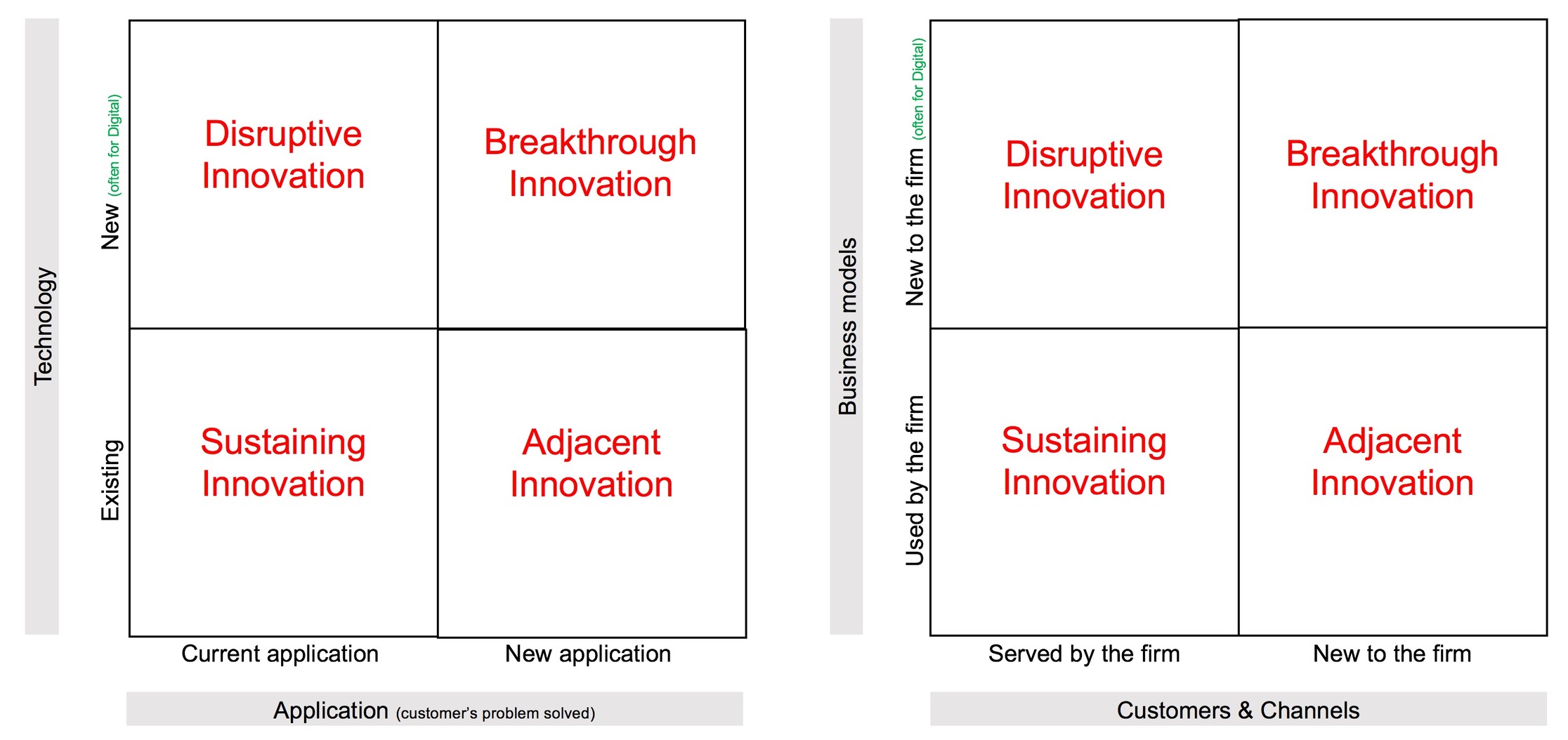
Becoming Digital often requires companies to make important changes in terms of technology/application and business model/targeted market.
The Path Dependence theory explains why corporates develop a strong immune system over time, which prevents them from adopting both negative and positive changes. This immune system, embedded in the firm’s DNA, creates a strong roadblock to radical innovations (disruptive and breakthrough ones).
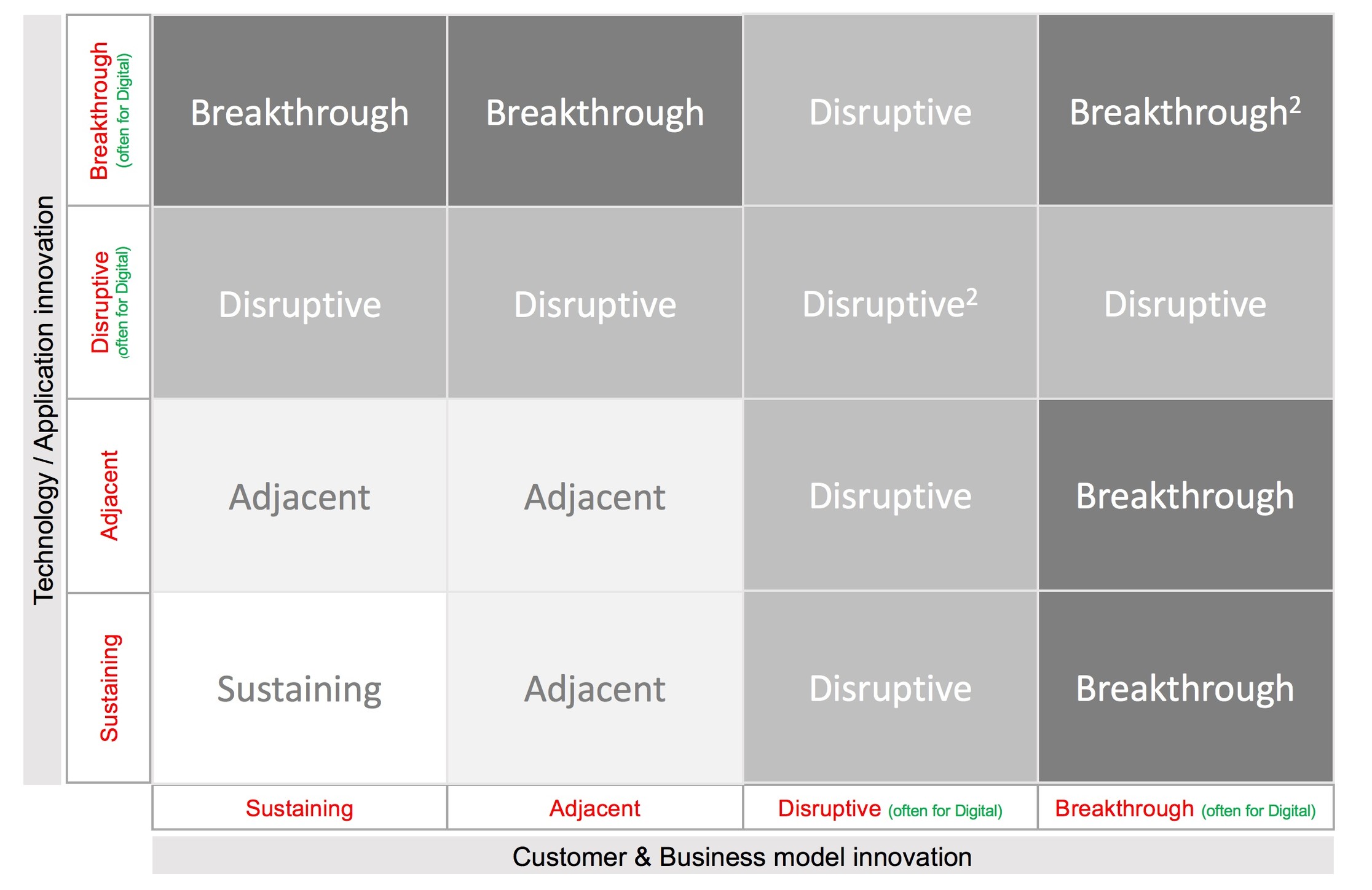
The above map defines the overall level of innovation according to the technology and business mapping. Becoming digital requires firms to become more efficient at managing disruptive and breakthrough innovation projects.
Digital disruption concerns all industries
A new wave of digital technologies – often referred to as Deep Tech – is impacting all sectors of the economy. Due to its massive value creation or redistribution impact, it is defined as the 4th industrial revolution by Pr. Klaus Schwab (Founder and Executive Chairman of the World Economic Forum).
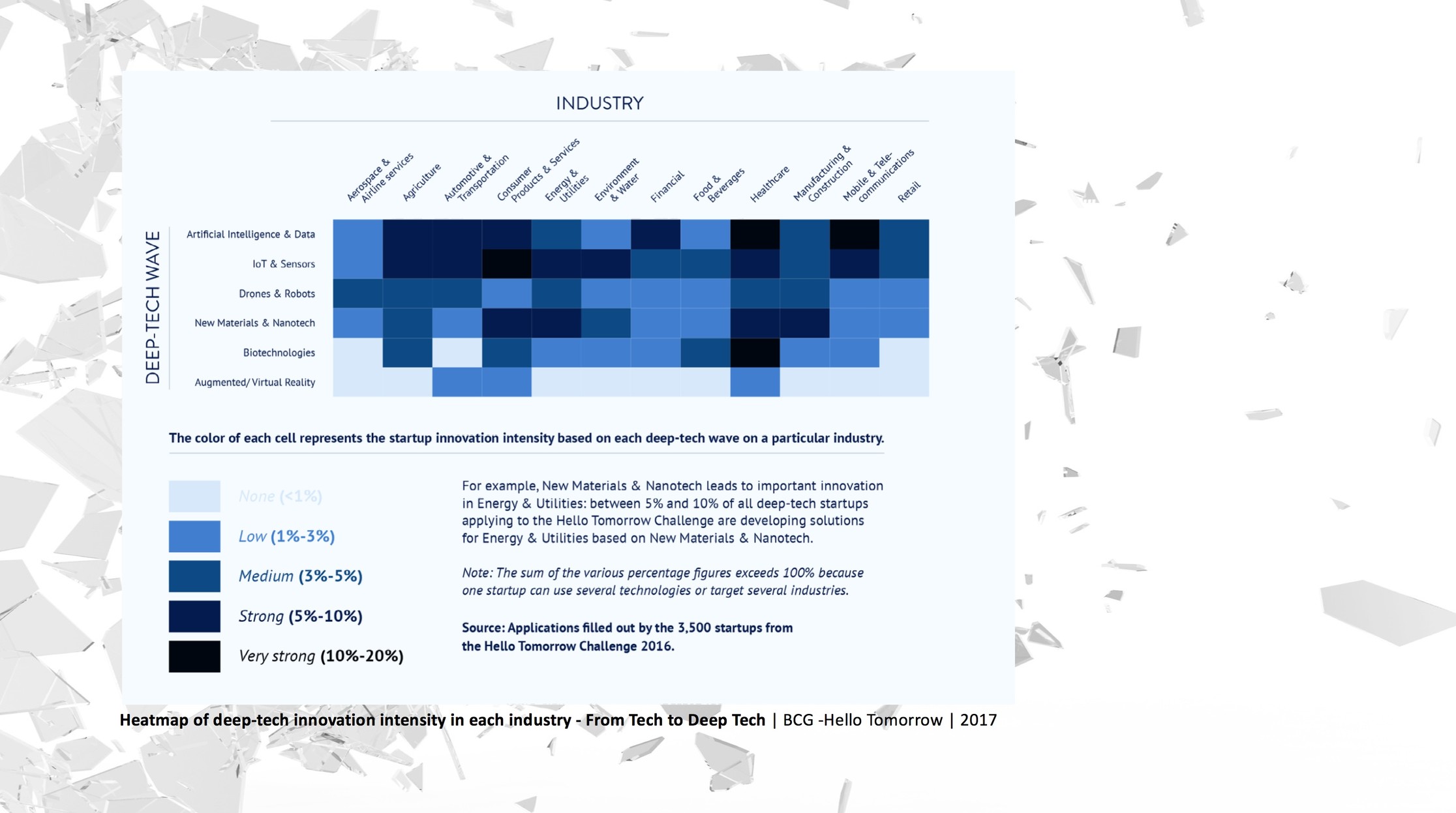
Deep Tech impacts all industries driving the 4th industrial revolution. Companies need to change drastically to survive.
Bitcoin emerged as the first digital international currency. Uber and Tesla have higher market valuations than historic car manufacturers. AirBnB competes with Hilton and Marriott in terms of valuation. Amazon is transforming and leading the retail industry, and Netflix is impacting the TV industry as Apple once did with the music industry. These well-known examples of digital disruptions represent only the top of the iceberg, with thousands of new companies planning to leverage Deep Tech to challenge established players and redefine markets.
Corporates are outsourcing their radical and disruptive innovations to start-ups
Although established firms excel at incremental innovation, breakthrough or disruptive innovation projects are rarely successful (too slow, too expensive, not scaling, or not radical enough). Therefore, many corporations – afraid to miss out on the 4th industrial revolution – decided to outsource this work to entrepreneurs. In order to do so, they invested heavily in corporate venture.
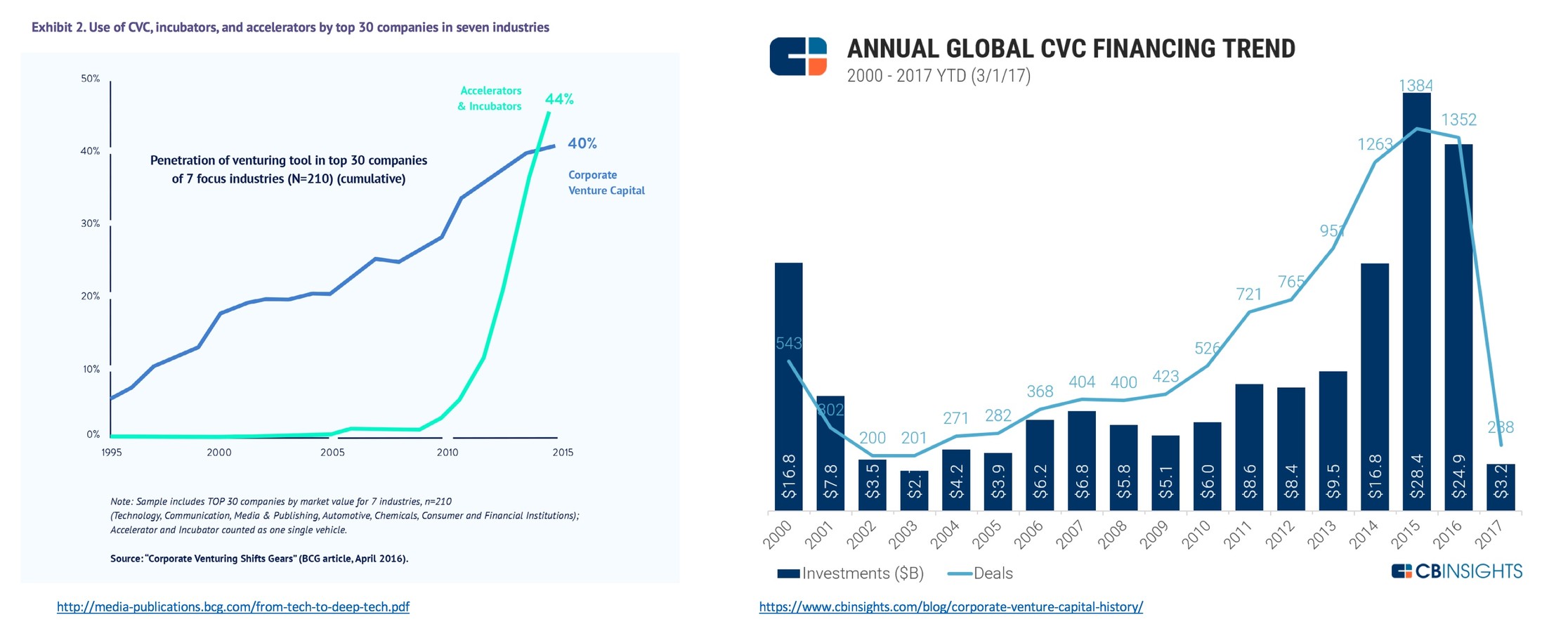
Corporate venture is now part of the innovation strategy of all major industry leaders
In 2016, the most active Corporate Ventures globally were Intel Capital, Google Ventures, Salesforce Ventures, Comcast Ventures, Qualcomm Ventures, Cisco Investments, GE Ventures, and Bloomberg Beta.
The Corporate Innovation Ecosystem
Corporations developed more advanced innovation strategies and created a complete ecosystem to scale radical and disruptive innovation projects effectively. Corporates aim to create synergies between their digital innovation initiatives and their core-business digital transformation.
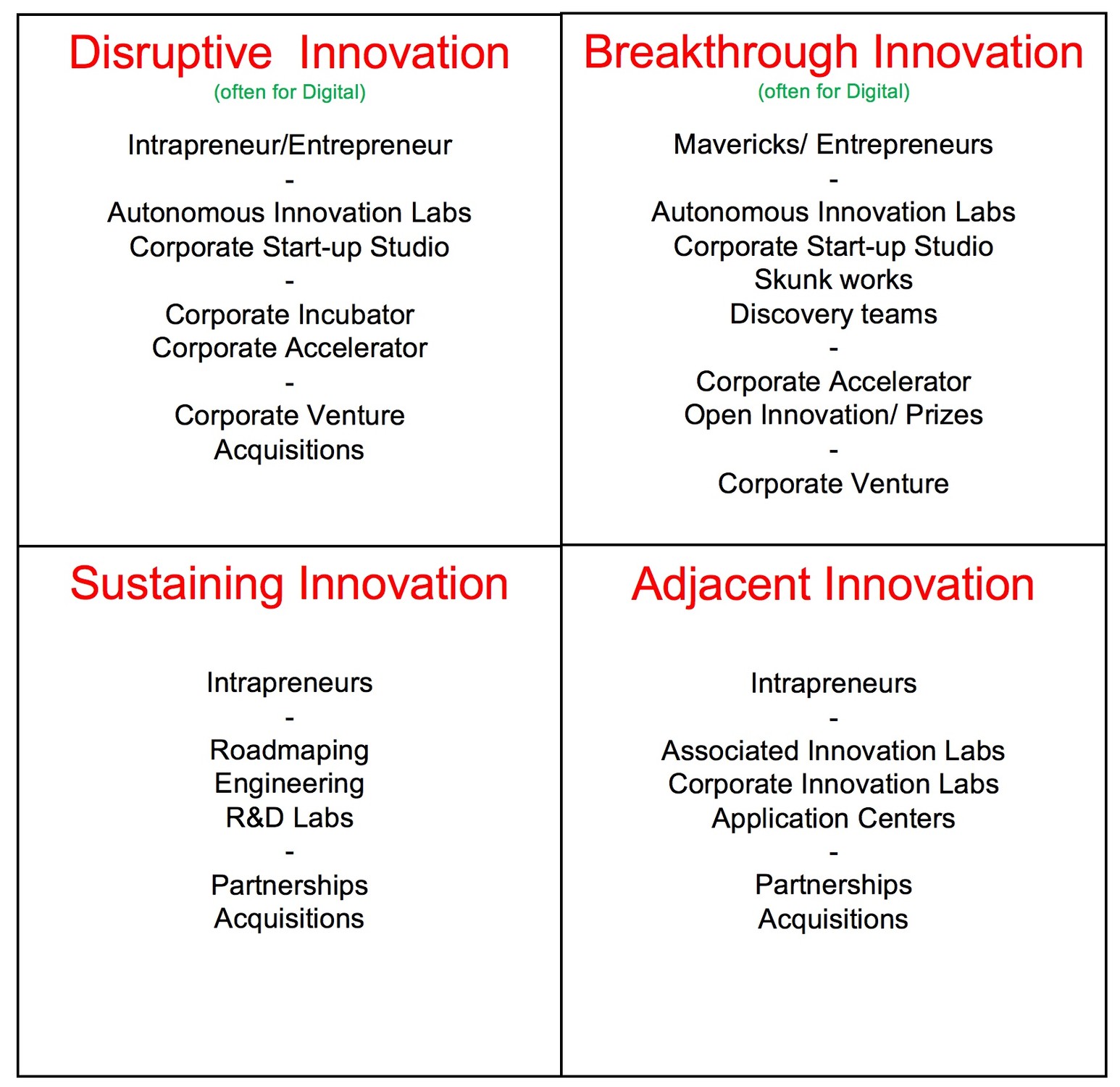
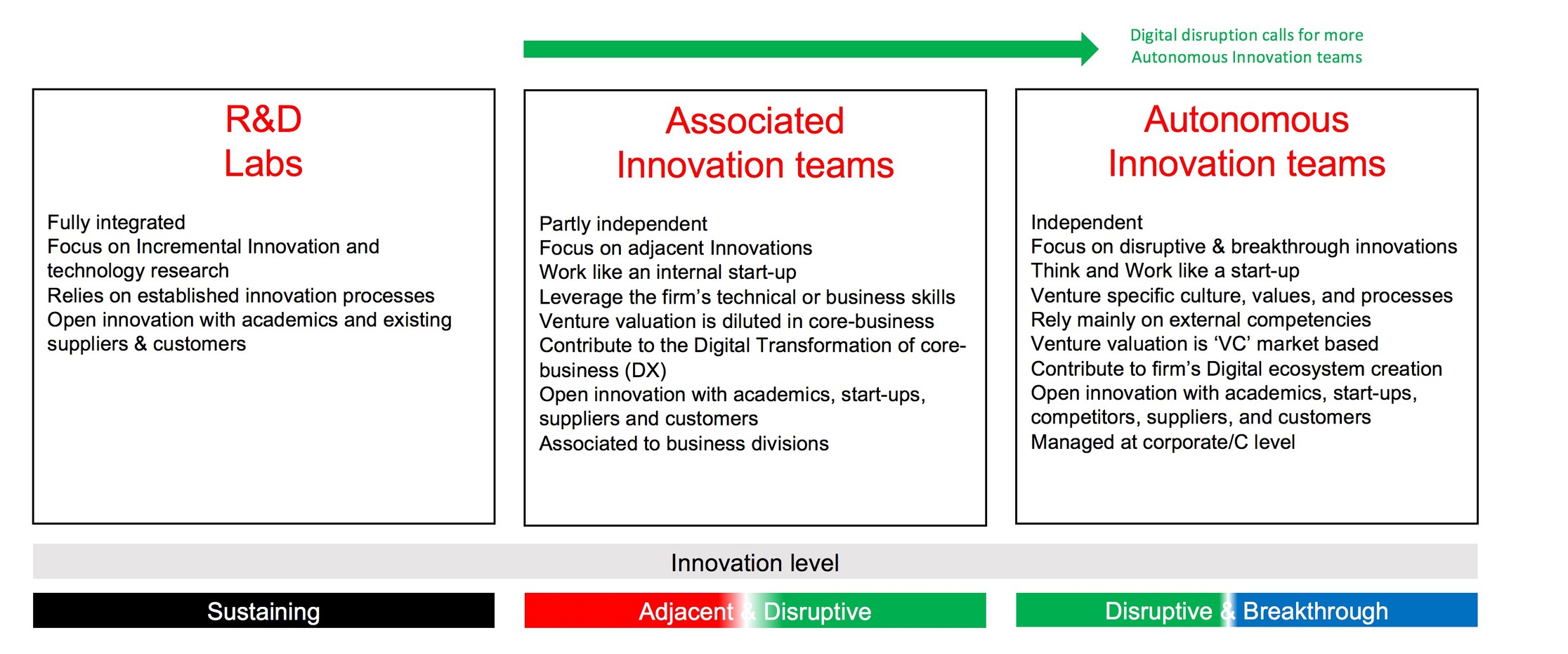
To ensure that the corporate immune system does not prevent new ventures' creation, firms must increase the autonomy of teams working on new digital initiatives. These initiatives must be managed as individual ventures, running like start-ups. This organization model is described by Bain & Company as The Firm of the Future.
Autonomous Innovation teams are like a start-up
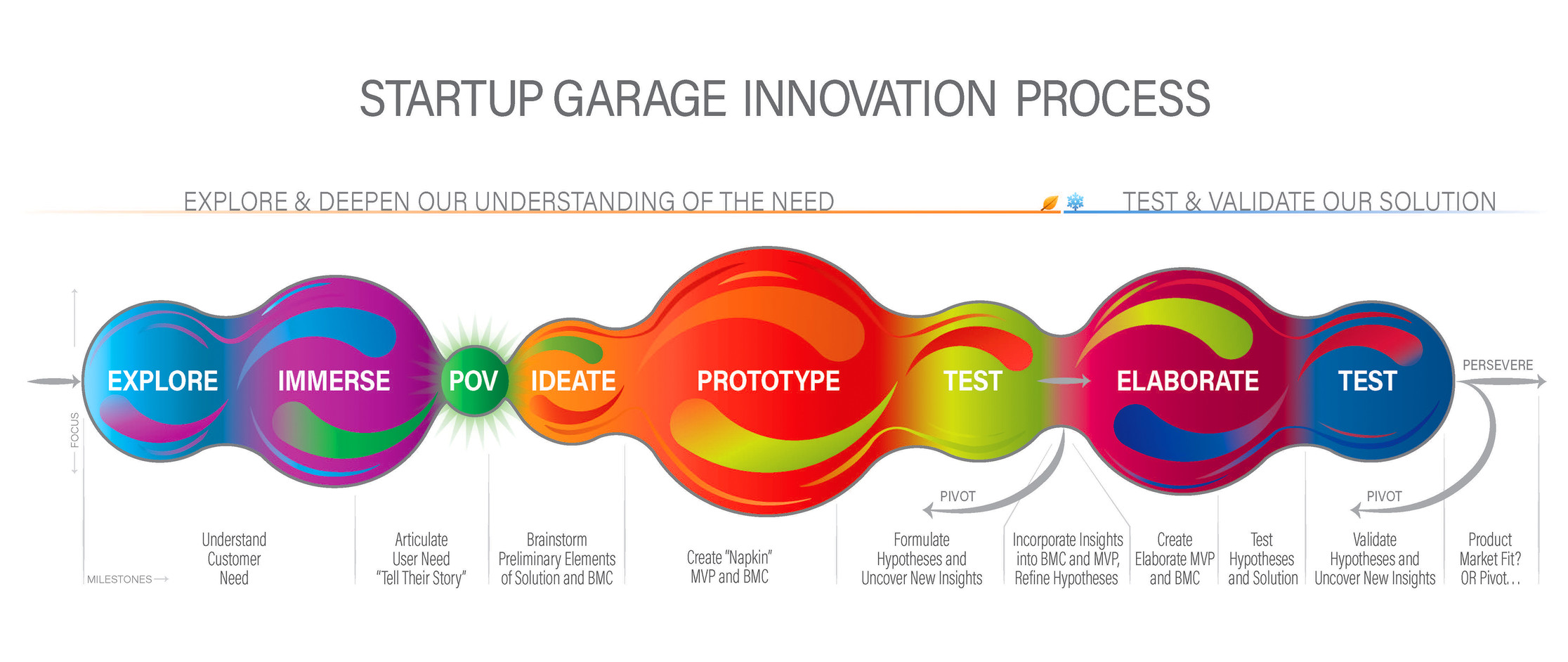
Start-ups are obsessed with gaining market traction for their products and services. They continuously seek confirmation that they are on the right path to succeed. Mastering the art of pivoting is crucial for entrepreneurs.
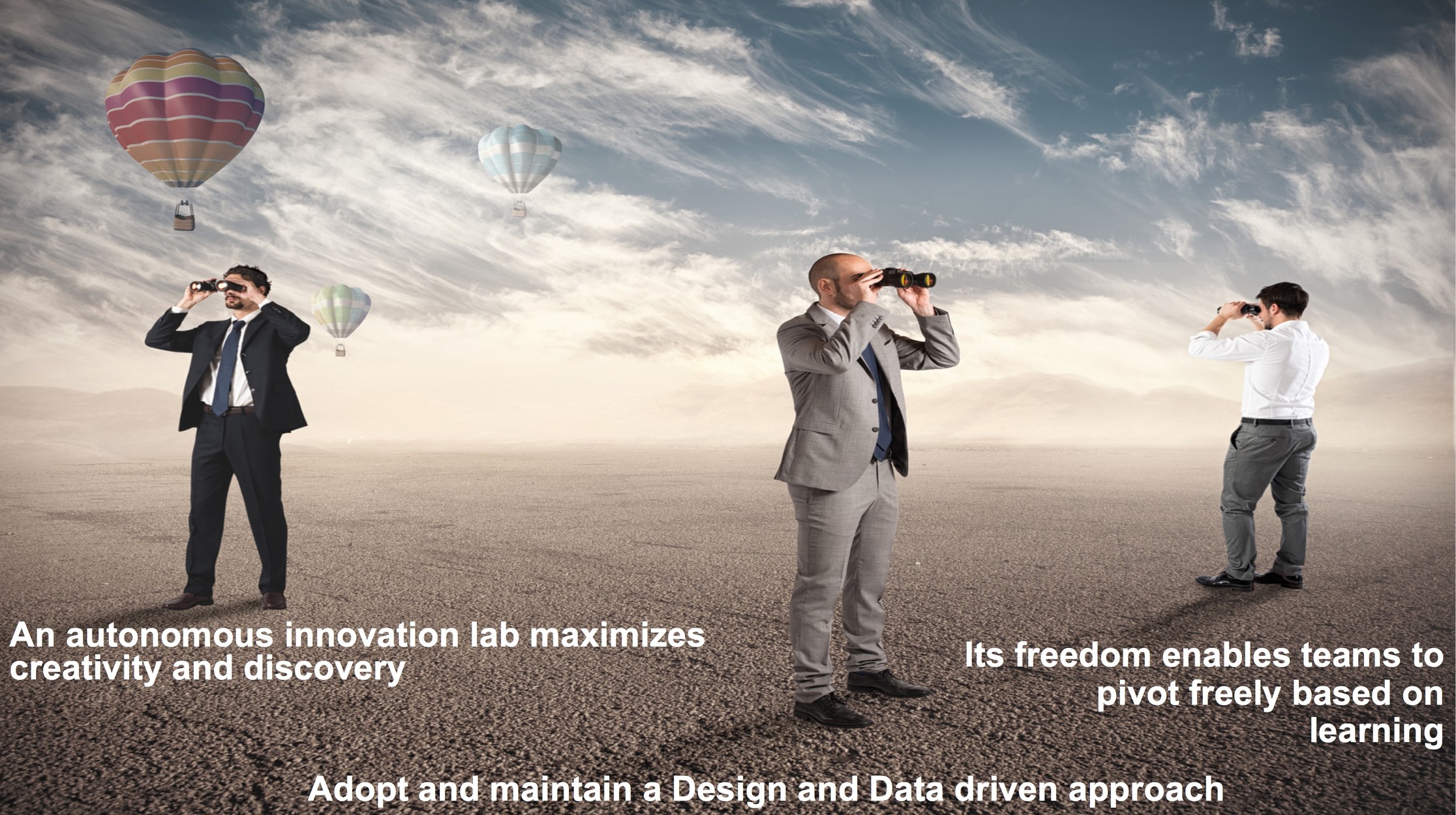
Founders understand that in their quest to gain market traction, they must reassess their decisions continually, staying open to change as the market demands. This freedom and pragmatic approach allow start-ups to discover new paths to success in uncharted territories.
Deep-tech start-ups need corporations
It would be dishonest to paint an overly positive picture of the entrepreneurial world. The success rate of start-ups remains low. 71% of start-ups fail in their first 10 years. It is interesting to see corporations betting their future on Corporate Venture, a system with such a high failure rate.
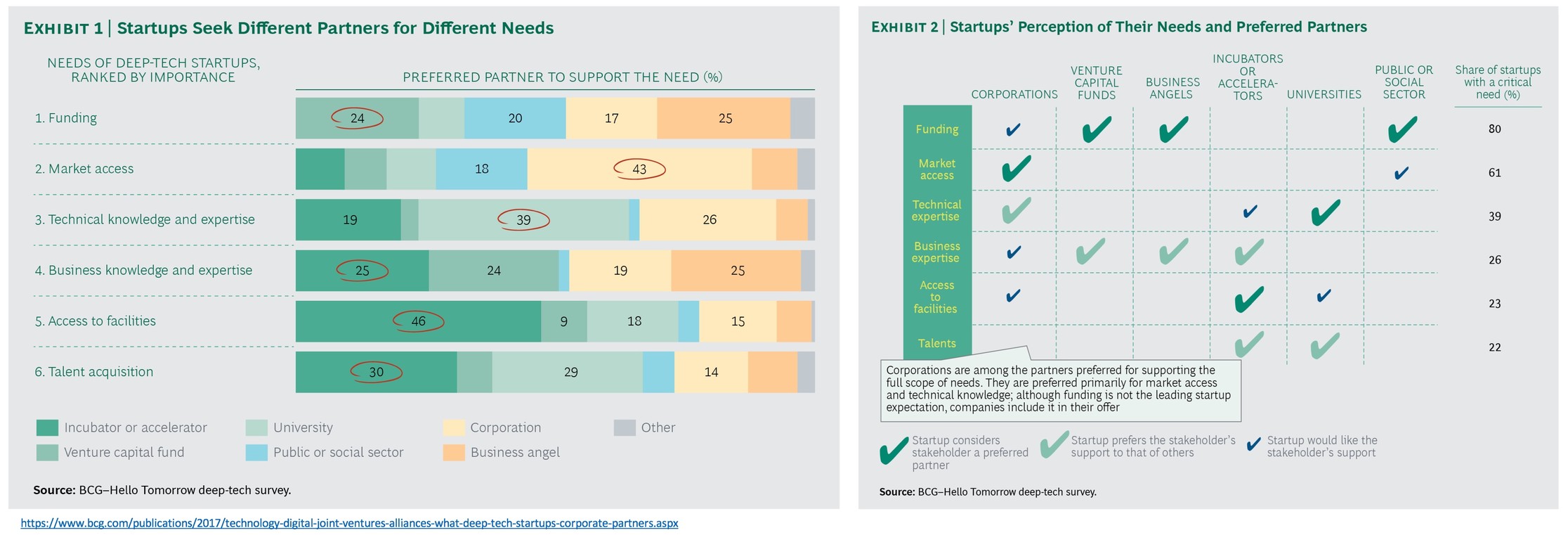
Recently, BCG ran a survey with 400 Deep-Tech start-ups, identifying that market access and technical expertise are crucial for their development, both of which corporations can provide.
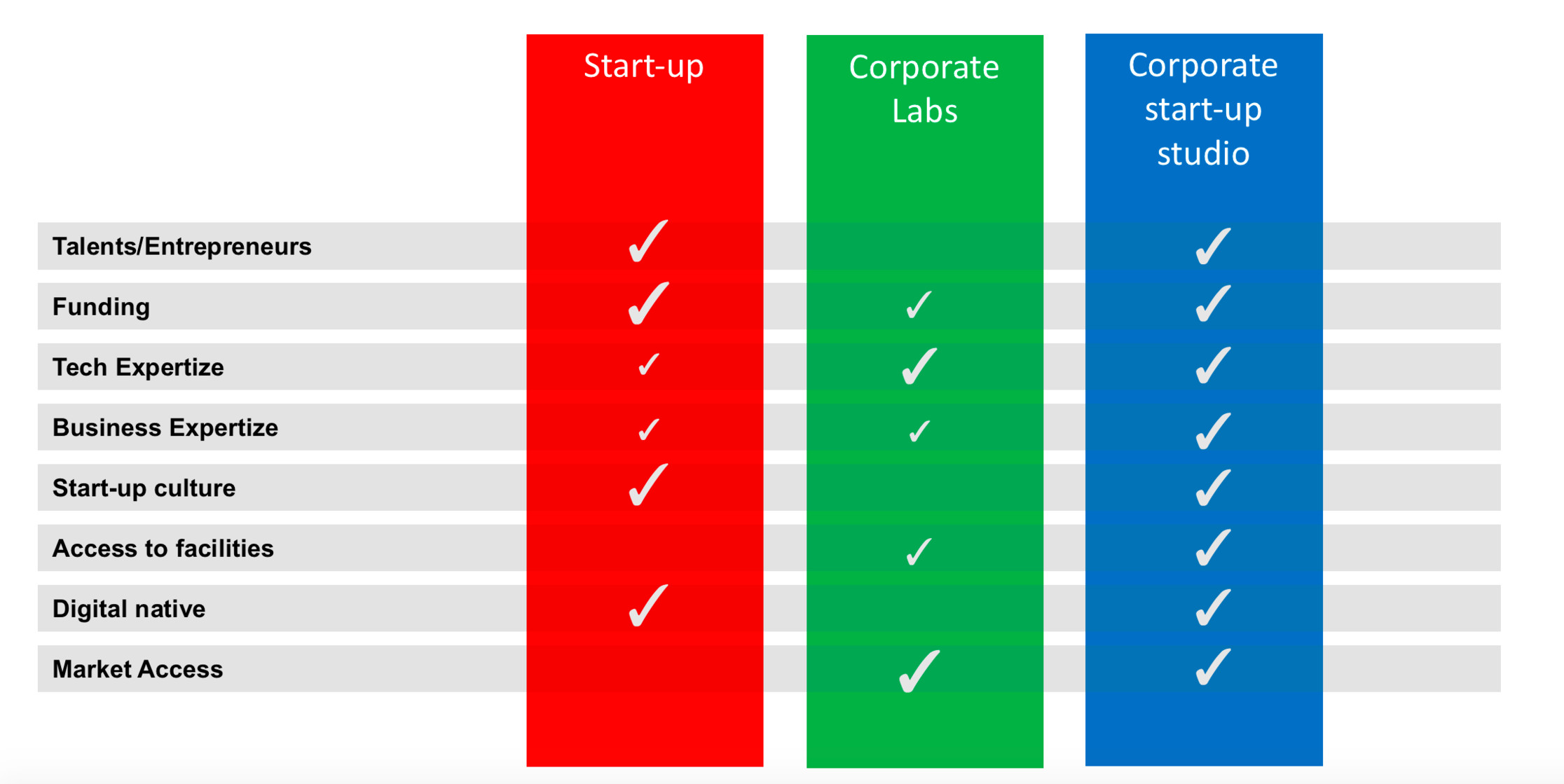
Deep-Tech start-ups welcome the help of corporate to gain market access and technical expertise. Both are critical items for the development of their digital venture.
The corporate start-up studio is an optimized solution for digital disruption
Entrepreneurs and the start-up ecosystem have the right DNA to develop new digital ventures successfully. However, when it comes to Deep Tech, corporations possess unique assets that start-ups need.
A Corporate Start-up Studio brings together the best of both worlds.
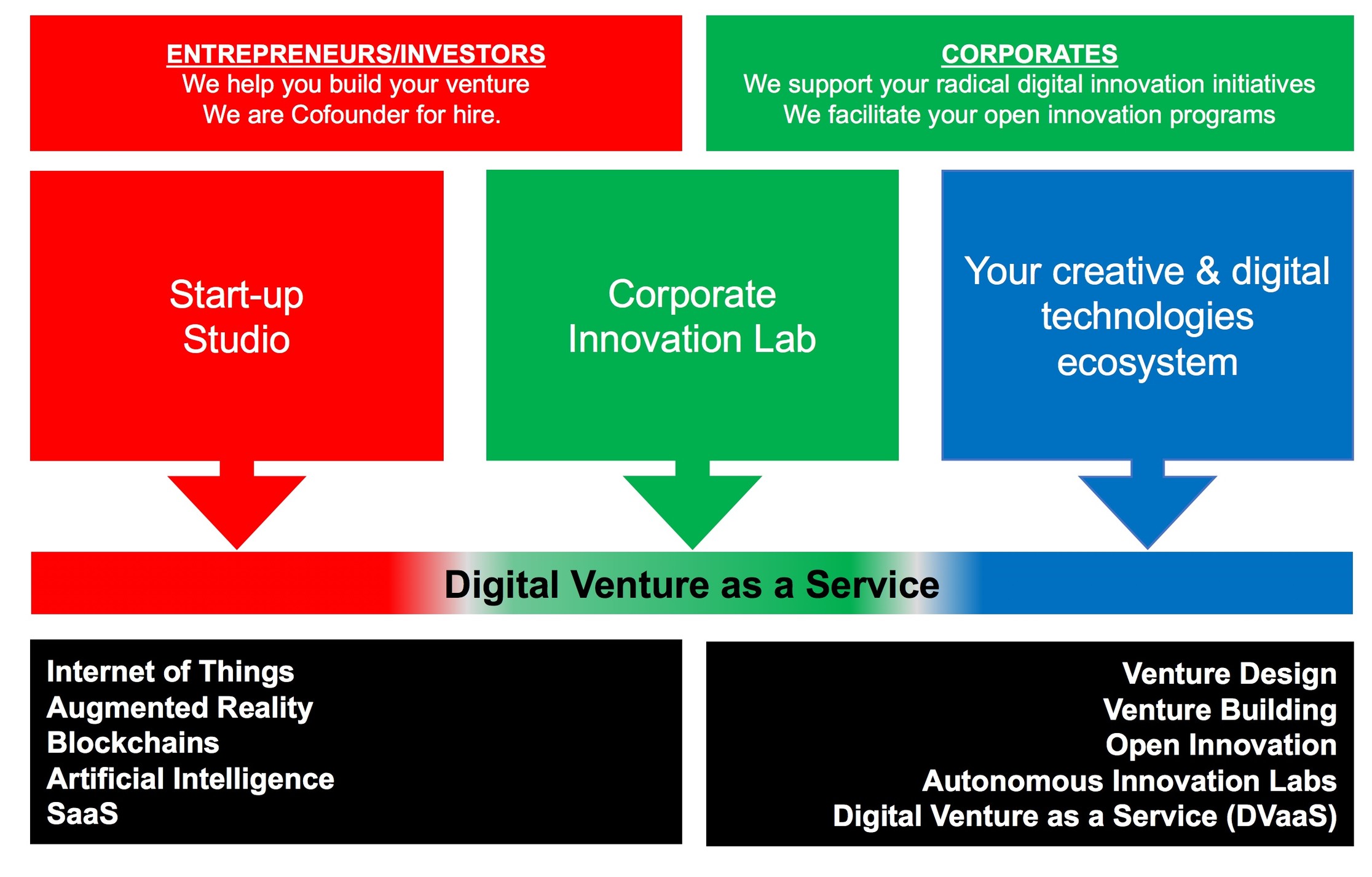
Future Economy Studio offering
The Future Economy Studio is the first start-up studio helping corporations create and manage autonomous innovation teams.