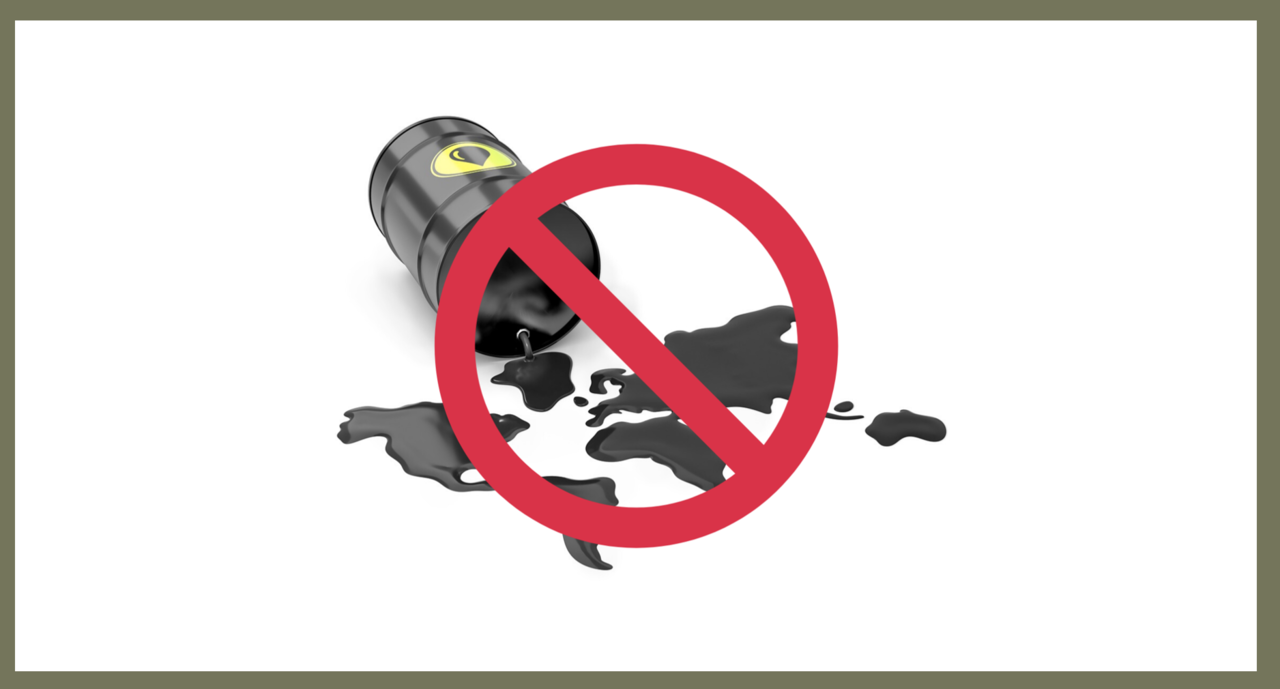
According to the IEA, the world needs to stop investing in Fossil Fuels now to have a chance to limit Global Warming between 1.5 and 2.1 degrees Celsius. Nevertheless, O&G upstream investments are still occurring worldwide, making it almost impossible for our societies to reach their decarbonization goals. None of the large O&G companies have aligned their CAPEX with the Paris agreement. 2021 will be another record year for GHG emissions globally.
Fossil fuel companies invest massively to increase their fuel production. But they allocate only a tiny part of their money (less than 20%) in clean energy projects and Carbon Capture and Storage (CSS). It seems the fossil fuel industry has given up on our planet and societies and refuses to reinvent itself, denying the urgency to reduce their volumes and the associated emissions.
Obviously, decarbonization investments need to outpace fossil fuels investments for emissions to reduce.
Why are investments in Fossil Fuels still happening?
Below are the top 4 reasons why fossil fuel investments are still taking place:
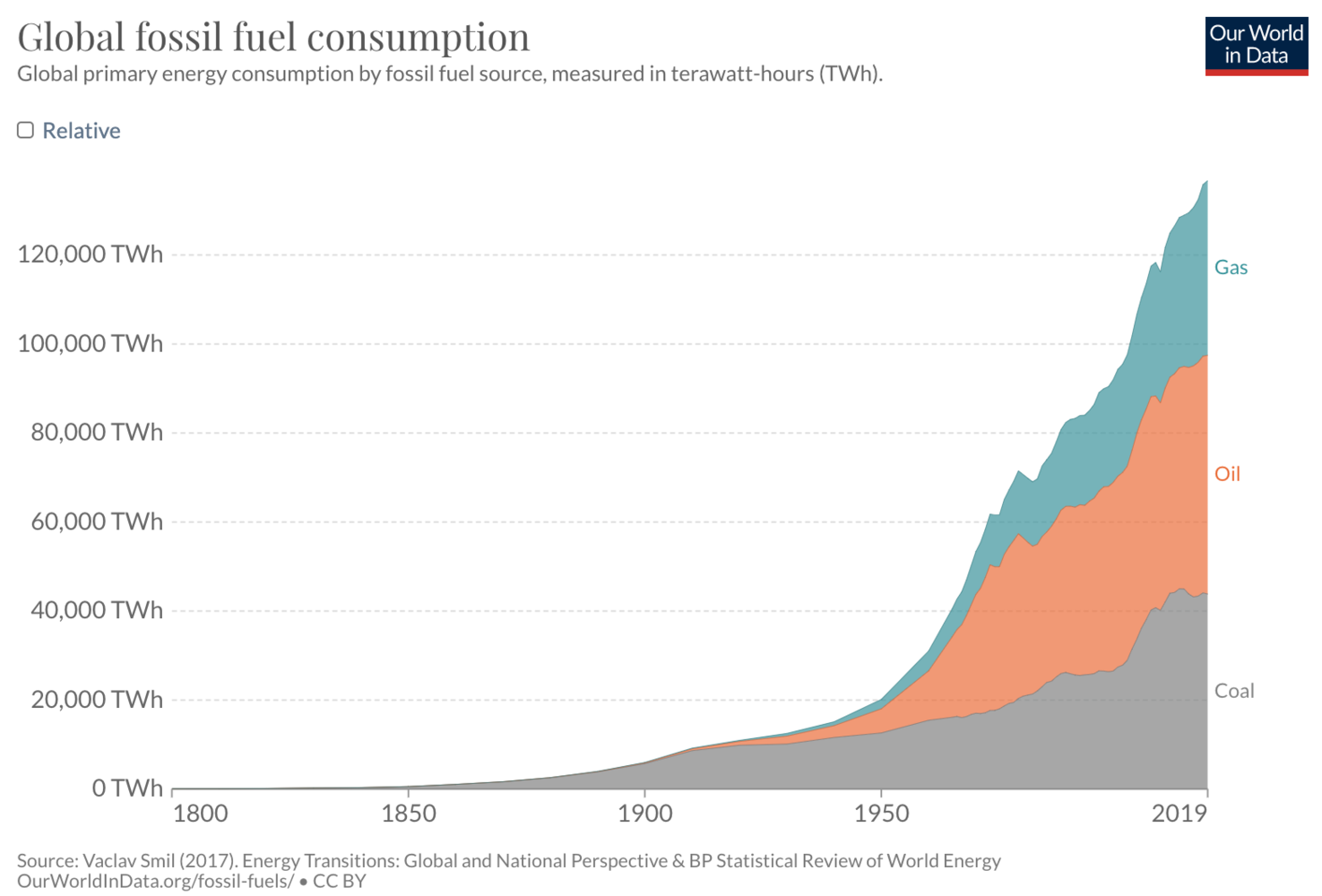
- There is still a high demand for Fossil Fuels.The overall consumption of fossil fuels has increased continuously in the last years, and so has the world's GHG emissions.
- Fossil fuel investments provide attractive returns to investors. Fossil fuel companies can offer a higher yield than other companies. Few major producers control the market, and it is relatively easy for them to ensure a minimum level of profitability by regulating the market's supply side. Investors only interested in financial returns and without consideration for the significant damages caused by these companies on the Climate will still invest in the fossil fuel industry in the years to come.
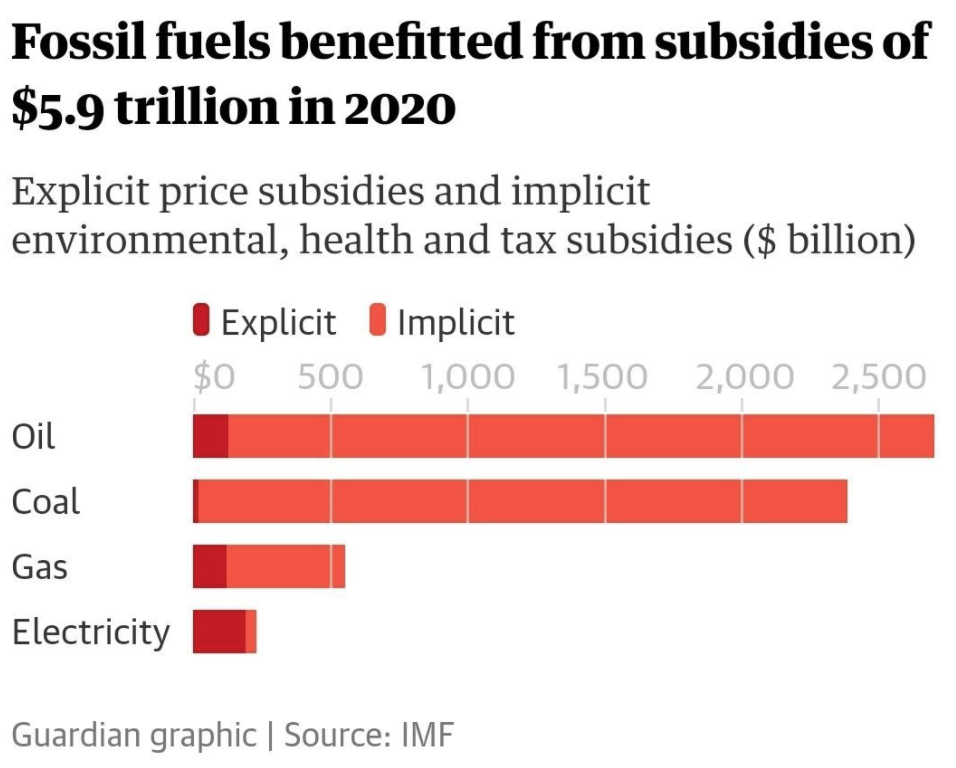
- The fossil fuel companies don’t see liabilities in being major carbon polluters.Today, fossil fuel companies do not fear justice, lawmakers, and regulators. Consequently, these companies do not believe they can face financial penalties that could put their profitability or existence at risk. In Europe, we recently witnessed an important justice decision (against Shell) that could positively influence the Oil & Gas (O&G) players' strategy. But it is not enough and still an isolated event, and many (former) state-owned companies remain heavily protected. Even Shell announced that they appealed the decision to keep its high level of investments in carbon-intensive products. While most countries signed the Paris agreement and recently announced Net-zero commitments, governments still have no legal action against Coal or O&G companies to align with their targets. The world will spend billions of dollars on Climate Adaptations programs in the years to come because the governments fail to reduce fossil fuel consumption. These costs will come on top of the already existing massive trillions of dollars in subsidies these fossil fuel companies receive.We should also add charges of the natural catastrophes associated with global warming (wildfires, flooding, storms, etc..). Taxpayers are financing the growth of GHG emissions and the programs to adapt to the associated negative externalities (welcome to the biggest ever created Ponzi scheme!). Today, Fossil fuel and climate adaptations programs represent more investments than those allocated to decarbonization efforts ($500Bln per year).
- Countries see Fossil fuels as a way to ensure energy security and reduce their energy costs.For years, countries have been building advanced geopolitical strategies to secure their supply of Fossil Fuels at the lowest cost. These energy strategies have been the foundation of their economic and industrial growth. Fossil fuels companies use energy security and energy costs as a dissuasion strategy. The fear of being short of energy or facing increased energy prices encourages countries to postpone necessary climate mitigation actions. But according to the IEA, the current fossil fuel upstream infrastructure is enough to provide the fuel the world needs during the energy transition. Consequently, there is no need to increase the upstream output once the world commits to its decarbonization. Today, due to the cost-effectiveness of renewable energies, countries see clean energy as a way to increase energy independence and reduce their overall energy costs. Indeed, most countries are net importers of fossil fuels and are exposed to commodity market volatility. Declining the import of fossil fuel without losing economic competitiveness is a fantastic opportunity.
Why may governments want to treat Fossil Fuels like Big Tobacco?
The latest reports published by the IPCC give an indisputable scientific foundation for the governments to take action against the fossil fuel industry. But our societies still did not reach Fossil Fuel peak demand. And even with all the current climate pledges, our world is still not on track with the Paris Agreement.
Our governments need to think out-of-the-box and challenge the status quo to initiate the decline of fossil fuel consumption. For that purpose, policymakers may decide to treat the fossil fuel industry like the Tobacco one.
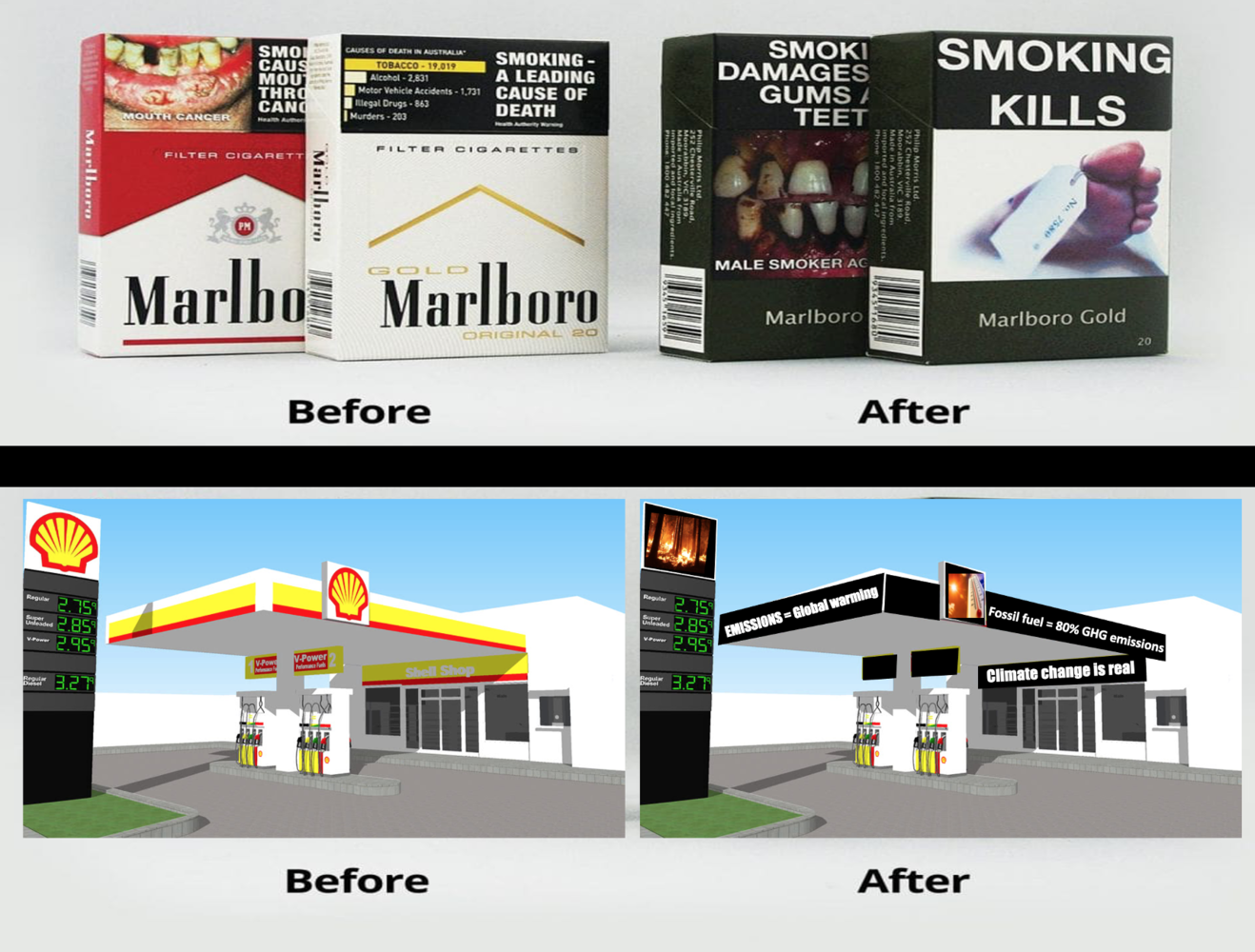
To influence consumption by being more transparent with consumers about the impacts of fossil fuels
Everybody who smokes cigarettes understands they put their life on the line, and nobody wants their children to smoke. By putting similar mechanisms in place for Fossil Fuel products, governments can send a powerful signal to the public and businesses and create a framework to control consumption and ensure its decline in the coming years. Note that people still smoke, there is no shortage of cigarettes, and tobacco companies still exist as profitable private organizations.
There will still be fossil fuel suppliers in 2050-2060, and some of our industrial pieces of equipment, planes, and old cars will still run using such energy, but they will become the exception more than the norm.
To limit the lobbying power from the Fossil Fuel industry
Today, fossil fuel companies use all their influence, advertising programs, and lobbying power to defend the status quo and prevent the energy transition from accelerating. They promote unrealistic applications for Hydrogen or the uncertain and unreliable carbon capture and removal technologies.
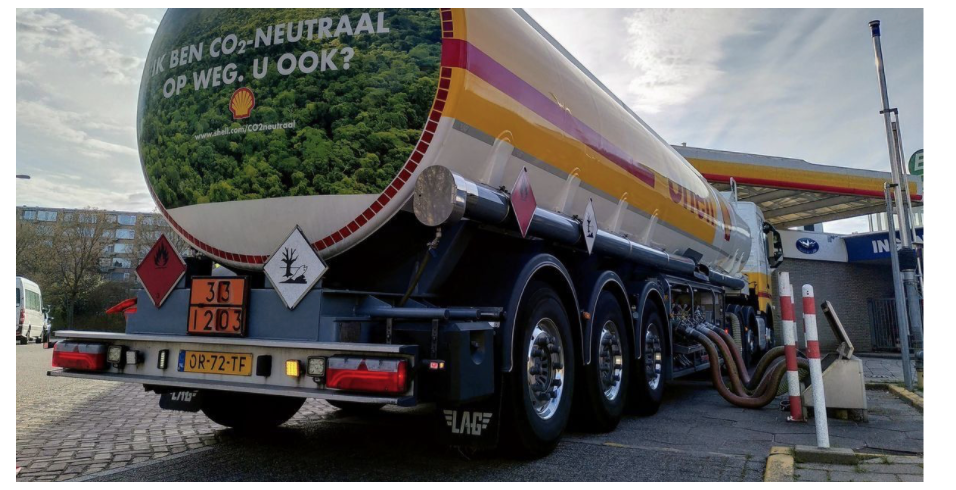
But things are changing; Amsterdam is the first city to ban advertisements for fossil fuels.
Such an approach also helps remove Fossil fuel industry representatives from the critical decision bodies related to the energy transition. It indeed becomes much more complicated for politicians to be supported or associated with such companies.
To degrade the financial profile of the fossil fuel industry
It will force fossil fuel players to reconsider their CAPEX. With such a policy in place, the outlook for the future of the fossil fuel industry becomes more uncertain and less attractive for investors. Such actions would put fossil fuel companies in the “sin stocks” category, driving capital away unless they adopt a climate-friendly strategy.
It would ensure that private capital and talented human resources privilege the climate-friendly energy sector over the lucrative fossil fuel.
To finance Climate Action
Many people see a global carbon tax (with a fair/high price) as a perfect solution to the climate crisis. Indeed such tax drives actual decarbonization actions across the different industries at different levels of the supply chain. With a high enough price, these mechanisms drive results (cf. Sweden example). But the implementation of a cross-industry carbon tax can be highly complex (cf. CBAM), and the associated carbon accounting exercises even more. Carbon leakages or creative carbon accounting (with offsets) practices are also difficult to prevent.
A Global Carbon Tax on Fossil Fuel Consumption could be a simpler version easier to implement everywhere. The outcome would be similar and highly efficient as the costs would drill down into the economy the same way as the fuels and carbon emissions do. By doing so, carbon-intensive products and services will become less competitive and lose market shares unless they become more carbon efficient.Governments could then control the tax impacts, ensure social justice, and energy transition fairness by applying tax refund mechanisms/exceptions or green energy checks for specific social groups or industries on their budget. Such a Global Carbon Tax on Fossil Fuel Consumption would address the leading root cause of climate change as fossil fuels are responsible for 80% of world carbon emissions. It would also be possible to adjust the level of this tax at the country level according to the cumulative GHG emissions and GDP per capita (PPP) to limit the impact on emerging economies and ensure that historic polluters pay.
The acceptance by the public of a Carbon Tax is a risk for policymakers. By treating Fossil Fuel publicly as Tobacco, governments can gain higher support for such measures and create more room for their climate actions.
This inflection point could also be an opportunity for the Fossil fuel players
For all these reasons, regulators will radically push for decarbonization and increase the pressure on the fossil fuel industry. For them, dealing with the fossil fuel industry as they deal with the Tobacco one may be part of the solution!
The fossil fuel industry may fight against such policies. Still, it could also represent a unique window of opportunity for them to negotiate and find a master settlement agreement for the immense legal liability threatening their corporations and their executives.
As part of this settlement, governments could wave financial and legal penalties of countries/companies that align their CAPEX with the Paris Agreement and support a Global Carbon Tax. Consequently, these corporations and their executives will not fear the legal decisions following the many natural catastrophes and economic disasters Climate Change will generate in the future. The governments' motto for the fossil fuel industry is becoming.
"Change now, or you will be forever accountable for your actions!"
note: Shell is present in the infographic because it is the biggest brand in the fossil fuel industry as Marlboro is in the Tobacco one. This article is not written with a specific corporation in mind.