People reading my posts over the months know that climate change and the energy transition is a topic I cherish.
I wrote several articles on how corporations can reduce their carbon footprint and put procurement strategies to limit their GHG emissions and energy costs. I also founded a Fintech Climate start-up named Positive Energy Ltd to support the scaling of clean energy infrastructure projects developed by SMEs in emerging and developing countries to accelerate the energy transition.
This post exposes the strategy my wife and I put in place to reduce our carbon footprint. Our family (we have two small kids and a golden retriever) relocated in 2020 from Singapore to the Netherlands, and we bought a new home. Along with our installation, we tried to reduce our carbon footprint to contribute to the global effort. I transpose for our household some of the principles I advocate for in my professional life.
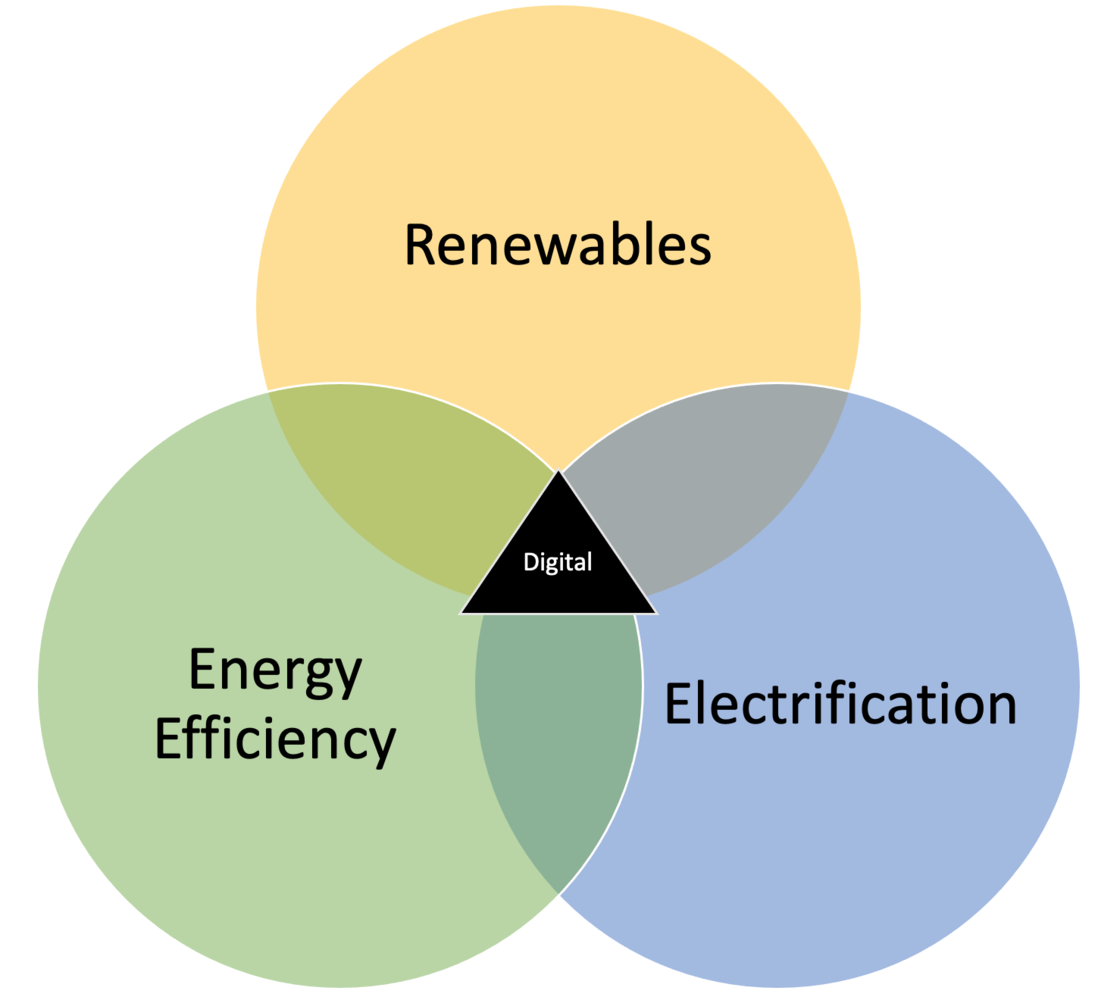
Along with our installation, we tried to reduce our carbon footprint to contribute to the global effort. I transpose for our household some of the principles I advocate for in my professional life. Before starting, I want to give a short overview of our family and values. According to most classification standards, we belong to the lucky ones as we are considered wealthy - even very rich. But we depend mainly on the income/salary of my wife to live our comfortable life. I am not a member of the degrowth movement and believe in the modern economy as a powerful tool to improve people's living standards and happiness over time. I think our economies can achieve economic growth and social development while preserving the climate and biodiversity if well steered by policymakers and enabled by technologies. The strategy to decarbonize our home relies on the following principles: electrification (to phase out fossil fuel), renewables, energy efficiency, and digitalization.
Energy supply
We bought an old home from 1935 of 200sqm. In 2010, our house went through a renovation, and so it has relatively good insulation. The home uses gas for heating, hot sanitary water, and fireplaces. I selected a local green electricity supplier that sources its electricity from a local on-shore wind farm, biomass, and solar.
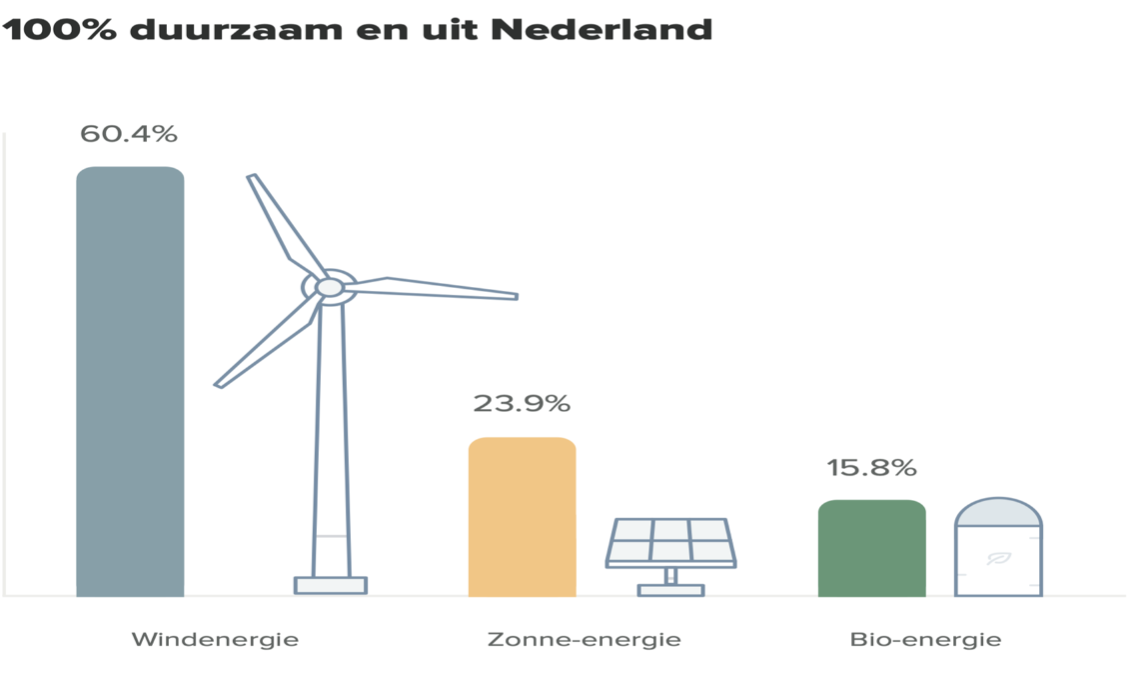
The rest of the time, we rely on the grid and the associated carbon intensity. The Dutch grid is relatively carbon-intensive (441g CO2-eq per KWh) as the penetration of renewable energy is very low today (even lower than Indonesia) and relies mainly on fossil fuels (natural gas). The selection of this green supplier involved no extra costs as the tariffs proposed were competitive. We pay 0.21886 per kWh for a single tariff, 0.22573 € for a normal tariff, and 0.21193 € for an off-peak tariff. For gas, the total supply price per m3 is 0.74071 €. We were lucky to subscribe before the recent energy crisis of this fall and locked our prices for 3 years. If not, our energy costs may be much/much higher. But higher energy costs would increase further the savings we realize on our decarbonization investments.
Energy Efficiency and lighting
Our old house is relatively well isolated (double glazing, wall, and roof insulation). We first upgraded all lights to LED and added a control system to switch them on and off automatically. This upgrade saves us around 540KWh per year, translating to approximately 120 € per year.

Electrification and Mobility
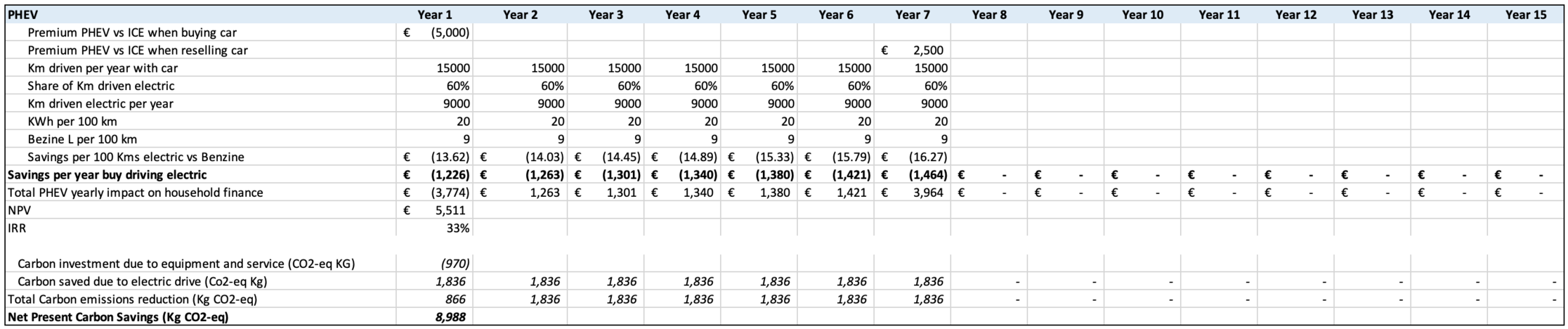
One of the first things we had to do when we relocated was to get a car. We were looking for a low-carbon vehicle able to carry our dog and two kids. We decided to go for a PHEV SUV with a 12KWh battery with a carbon footprint close to 50g CO2-eq per Km. We looked at family-size EVs, but we found them too expensive at the time. There are many options available now on the market. We don't commute in the car for work, and we make most of our trips within a 30km radius. I estimate that we do between 60% to 70% of our Kms using electric engines rather than ICE. We also decided to invest in e-bikes; one is a cargo e-bike that we use for groceries and the kids. We love it, and it allows us to use the car less often. There was an additional cost when buying the PHEV over a traditional ICE car. The Netherlands has put a carbon-based incentive system in place that makes carbon-intensive vehicles less attractive due to taxes. The Netherlands also offers a suitable charging infrastructure.Nevertheless, the penetration rate of Plug-in cars remains low compared to other countries. We love our PHEV car, and we found it highly convenient. When the local wind farm produces electricity, then our PHEV and e-bikes run on clean energy! I estimated that the extra cost when buying our PHEV over the ICE car was 5000€. But we will save more than this on our future fuel costs. We drive roughly 30 Kms on a charge. It means 0,4KWh per km or 0,08 € per Km or 8 Eur per 100km. Today the benzine price in the Netherlands is close to 2 Eur per liter. A similar car with ICE would consume at least 9 L per 100 Km. So it would cost us 18 € per 100Km. We drive 15 000km per year, which means we save 15 000*60%*(18-8)/100=1200 € per year just on fuel. Going to the garage for maintenance or the gas station seems awkward now.
Local Solar generation
We do not want to rely 100% on the low carbon intensity of my energy supplier as the Dutch grid is carbon-intensive, we decided to invest in our solar generation. We installed ten panels on our roof with a peak capacity of 3.9KWp. There is an attractive feed-in tariff (0,27€ per Kwh) in the Netherlands. Still, our primary motivation was to reduce the carbon footprint by reducing our dependence on electricity produced by fossil fuels. So we prefer to consume more electricity and less gas rather than sell electricity with profit to the grid and not reduce our gas consumption. Our solar panels help us provide further decarbonized electricity to our homes, cars, and bikes. We still manage to export from time to time clean electricity to the grid. We spent 5700 € on our solar installation. We decided to use micro-inverters to maximize the output of our system and deal with the shades. The payback is between 5 to 7 years, and the installation's lifetime is at least 20 years. We should produce roughly 3,5 MWh per year. The system is almost enough to cover our yearly electricity needs without the consumption associated with the PHEV/EV car. It means we save on our electricity bill roughly 900 € per year.

Electrification and Heating
Decarbonizing the heating system is often the most challenging part of old houses, but it is also the most significant contributor to our energy bills. I estimate we spend roughly 3000 € per year on gas. 80% of our consumption is for heating alone during winter months. How can you reduce your dependence on gas for heating without doing massive and expensive renovation work? I investigated changing my gas boiler for a central heat pump, but we didn't have the space for the required equipment. Instead, we decided to go for another hybridization strategy and install A/C units in our four bedrooms. I use the A/C units to heat the rooms during winter (as long as the outside temperature is above 5℃). But I can also use them for cooling during the hot summer days. The installation costs were 6600€.
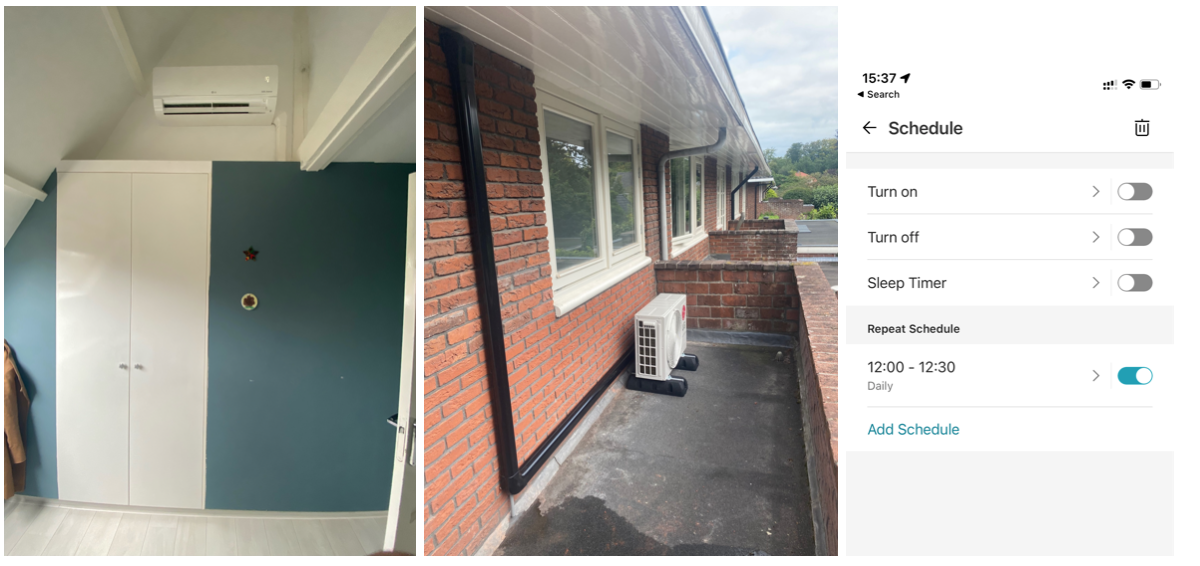
We also installed a room-by-room heating control system with intelligent thermostatic valves to ensure that the gas boiler is not running when the heat pumps are on. Such a system by itself can help you save up to 30% on your gas heating costs if you have a central thermostat today but combined with the AC units; the decarbonization impact is even more significant. Consequently, when an A/C is working in a room, the boiler will not heat the room thanks to the local thermostatic valves. Our smart heating system connects to the internet with wifi, and I can easily control it remotely and create a schedule for every room.
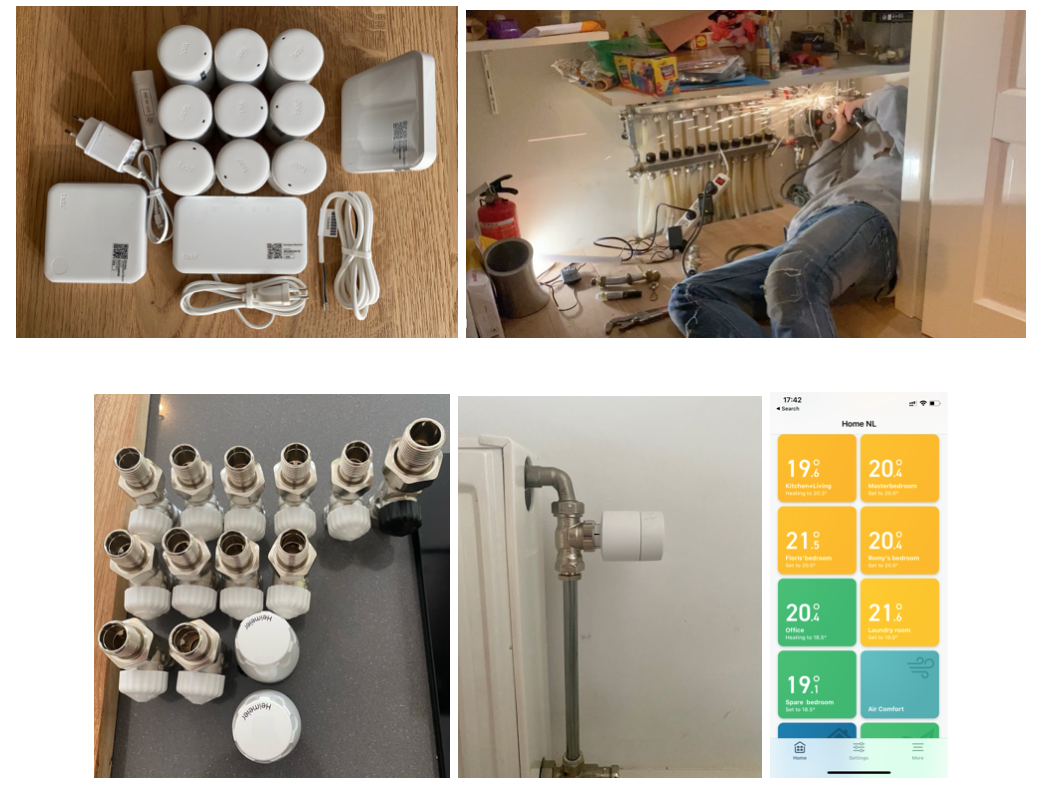
The control system cost us 1200 €, and my wife's father-in-law upgraded the thermostatic valves (an installation work worth 500 €). The A/C units work during lunchtime at 23℃ and store heat for the rest of the day. The A/C units connect to the internet with wifi. I can easily access them remotely, create a schedule for each room, and make sure they run one after another to limit peak electricity demand. With the solar energy we generate and the wind energy we buy, midday is when we are most likely to have the lowest carbon intensity for the electricity we consume. It is also when the outside temperature is more likely to be above 5℃ and so when we can benefit from the highest efficiency of the A/C unit heat pump (4.13KW of heat for 1 KW consumed).
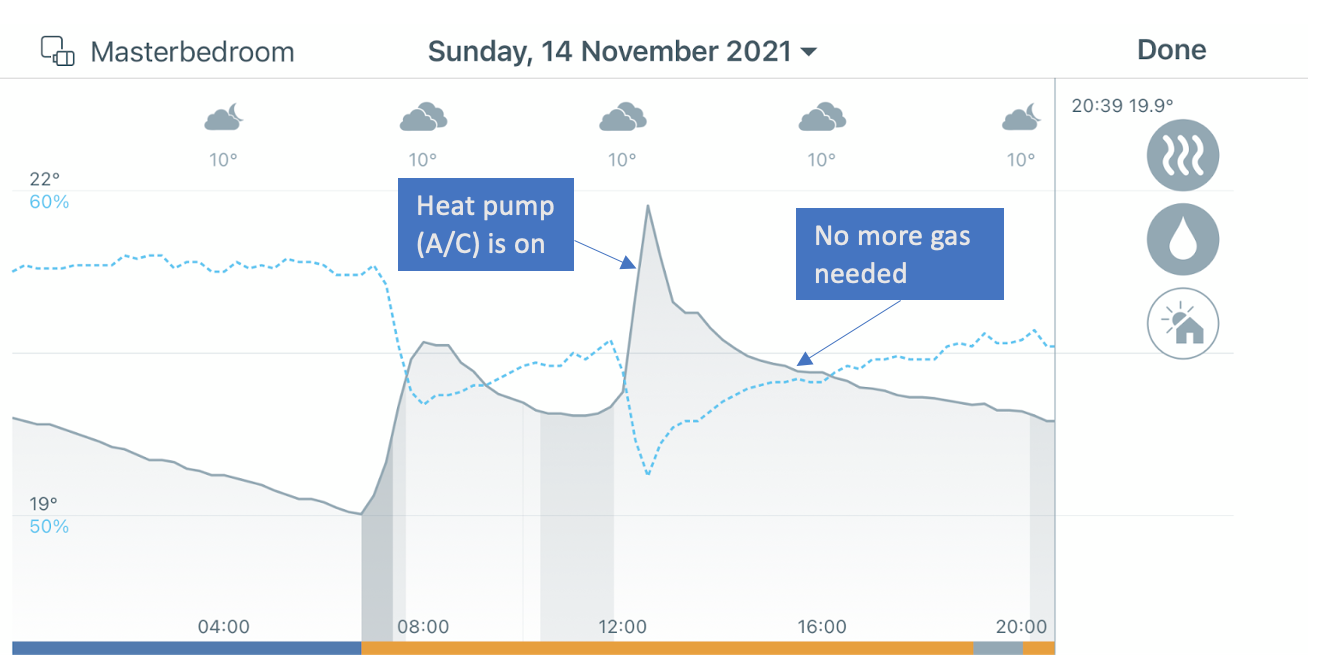
I estimate that by using my AC units for heating during the winter combined with the smart heating control system, I can reduce my gas consumption for heating by 30% to 50% and so save (3000*80%*30% or 50%) between 900 to 1200 € per year mainly during the wintertime. I spend a bit more on electricity when running my four (2.5KW Cooling / 3.3KW heating) AC units. They run 30mn each day during the four winter months, and the impact on my energy bill is (2.5 x 0,5 x 4 x 125 x 0.21886) = 135 € per year. It is also the most impactful decarbonization action of our household.
Financial and Environmental Impact
Financial impact
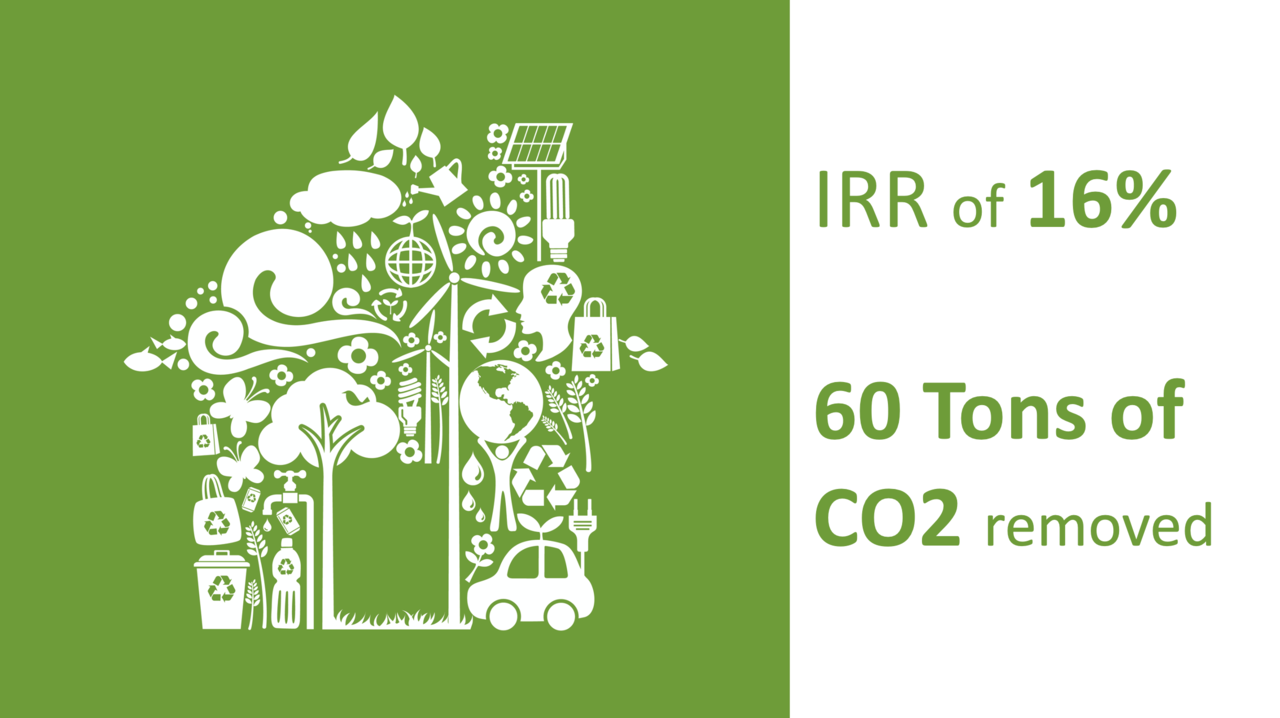
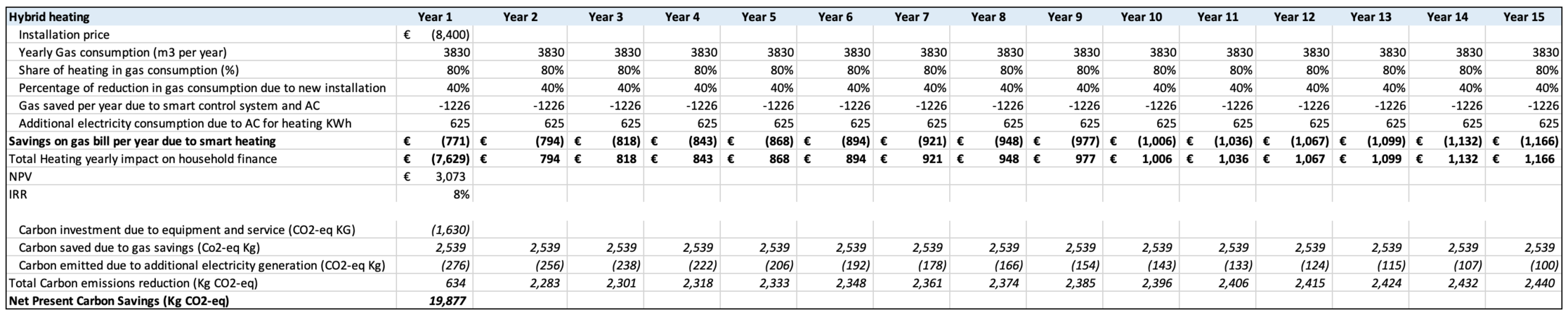
In total, we spent a bit more than 19 000 € on decarbonization projects. I also hired five different local companies to help me with these projects. This has a direct impact on the local economy. All of these providers were SMEs. 16% IRR. It is a really good number! At the end, we get almost the same return as a venture capitalist or investment banker while helping reduce global GHG emissions! This return is also tax-free as it is savings on our various energy bills. The payback is relatively long as it takes 6,5 years to return our investment. We also improved our comfort and increased the value of our home as it became more energy efficient. The AC units will also help us cope with the more frequent hot summer days associated with Climate Change.

Carbon impacts
As a result, our family created a Net Present Carbon Savings (over ten years) of almost 40 Tons of GHG with our investments. After 15 years, these projects will help us to save more than 60 Tons of GHG emissions.The calculation assumes that the dutch electricity's carbon intensity will go from 441 g per KWh to 230g CO2-eq in the coming ten years (minimum requirements according to the Paris Agreement). But in case the Dutch government would not manage this, our GHG savings would be much more important.

Lessons Learned
Lessons learned for Households
- Our next car should be an EV. A PHEV with a 100km range and fast-charging capability would ensure that we do 80-90% of our Kms on electricity. I would also consider a PHEV with a 100 Km range on batteries.
- Increase capacity of our solar installations (either more panels on our roof or by buying from a local community project). These additional solar panels should ideally produce electricity also early in the morning and later in the day. The goal is to have clean regional power available during a longer time of the day. Assuming we drive 20 000Km per year with an EV requiring 20KWh for every 100Km, we would need 4MWh more electricity to cover our yearly electric car consumption. It means we need almost to double our PV installed capacity from 4Kwp to 8KWp.
- Replace, if possible, our gas boiler with an electric/hybrid boiler and n electric hot water tank. Then we will only use gas for our fireplaces and freezing days. The rest of the time, we would run on clean energy/electricity.
- Explore local battery energy storage to maximize self-consumption instead of pushing excess solar energy to the grid and reduce grid peak demand. EV-to-home could be a good solution. If our car has a large enough battery, I can allocate up to 20KWh as an energy reserve for our home. It should allow me to better optimize my solar energy usage without investing in an additional battery unit. The mutualization of batteries is one potential advantage I see for an EV over a PHEV.
- Getting completely rid of gas in our home seems unlikely in the short term. But we will keep phasing it step-by-step.
- Keep monitoring and improve our decarbonization strategy.
Lessons learned for Solution Providers
- My PHEV car APP does not show enough statistics about the way we use it. For example, I would like to see the ratio between the number of kilometers driven on electric vs. benzine per week, per month, per year. That would help me to understand better our current driving behavior and the associated GHG emissions.
- I want to get an indication of the carbon intensity of the energy I consume from the grid at a given time. This information would help me further optimize the house's carbon emissions.
- It would be great if my car charging speed could vary based on my solar generation or the grid clean energy availability. I want my car to charge only when I produce solar energy, when carbon-intensive power plants are not running, and when the grid has the lowest carbon intensity. There is a need for more APIs and algorithms to optimize this. For EV, most people will not use the full range every day. So most of the days, the car could maintain a minimum level of charge (50%) but only charge the remaining if low carbon energy is available.
- My smart heating system can control the AC units with an IR controller, but it requires another device than the temperature sensor used to manage the heating system. It would be best if this could be the same device and if the smart heating system supports this energy/carbon optimization.
- I didn't find an excellent solution to shift my main loads (EV and AC units) based on my solar production or the carbon intensity of the grid. It seems there are no such solutions available. There is a need for standards to easily integrate these inputs and outputs in building/home control systems at the software level (Homekit, and co).
Lessons learned for Policymakers
- How can policymakers better incentivize households to shift their loads when the electricity is not only less expensive but also less carbon-intensive? Electricity Peak and non-Peak hours Dutch tariffs are not entirely related to carbon emissions.
- We need more solar power for a longer time of the day. Hourly based Feed-in tariff encouraging flattened solar generation curves can provide such an intensive and better foundation for decarbonization.
- Gov. could promote solar community projects for people to easily buy cheap solar power produced locally if their roofs do not provide this opportunity. It is also a way to give access to clean energy to low-income families. People who can install PVs on their roof get a fantastic hedge against future fossil fuel energy price increase and volatility. Utility retailers' prices are linked to fossil fuel prices today and so selecting a green electricity provider may not protect you from the energy price hikes.
- Why are ICEs still an option? PHEV already provides massive decarbonization in the short term without impacting the grid or the cost of cars too much!
- A hybridization strategy for gas heating is a good way forward for the existing building installed base. No significant rework is needed, and it is often possible to make such an upgrade. Such upgrades also directly impact the GHG emissions of existing buildings by reducing fossil fuel consumption and helping reduce energy costs. Effective incentives and policies could promote greener energy options, community solar projects, and hybrid heating solutions to aid households in achieving decarbonization goals.
Assumptions used for calculation