Dear Mercedes-Benz and Easee Teams,
I hope this message finds you well. Over the past years, I have shared my journey toward a more sustainable home through two articles: How I Decarbonized My Home to Make Money" and Behind-the-Meter Storage as a Key Enabler of the Energy Transition. These experiences reflect my commitment to sustainability and efficient energy use, and I now write to seek your attention on a pressing challenge I am facing.
Recent Sustainability Upgrades
Our household recently made significant strides towards greater sustainability. We invested in a hybrid heat pump from Quatt, reducing our reliance on traditional heating methods.

Additionally, we replaced our plug-in hybrid vehicle (PHEV) with a fully electric family SUV from Mercedes-Benz. This transition marked an essential step toward decarbonizing our mobility and contributing to a cleaner future.

Why Not Volvo EX90?
Although I was initially inclined to opt for the Volvo EX90 due to its promising Vehicle-to-Home (V2H) functionality, several factors led me to choose Mercedes-Benz instead. The uncertainty around the availability of V2H in the Netherlands and the lack of clear communication from Volvo and its dealership were concerning. Moreover, the market currently lacks widely available bi-directional EV chargers that support V2H, despite several players announcing new solutions recently.
The second-hand EV market also presents compelling opportunities at the moment. While the absence of V2H was a consideration, I am nonetheless delighted with our new EV. Every drive has been a joy, and we relished several memorable road trips across Europe this past winter.
The Current Challenge: Smart Charging Complexity
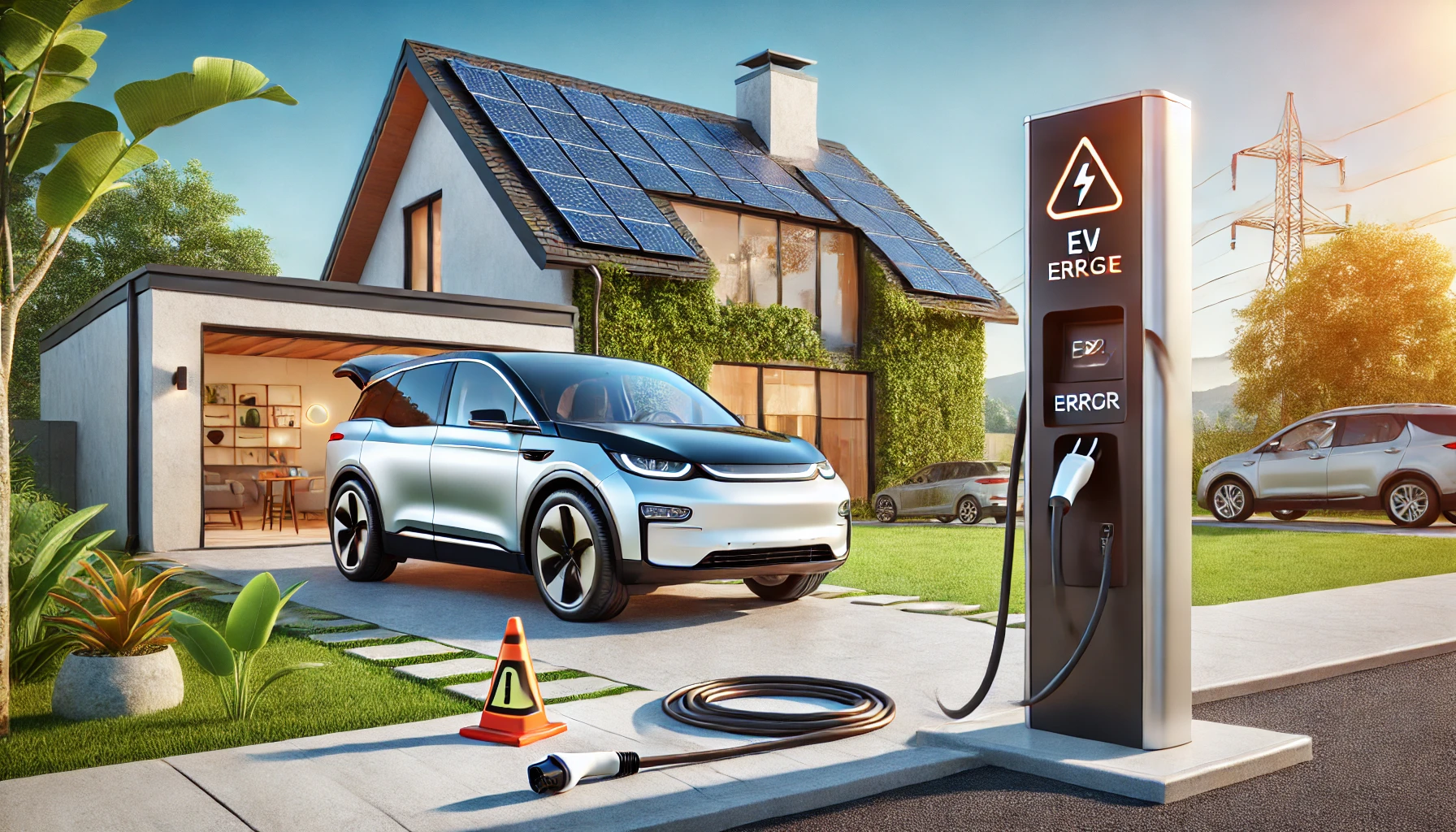
Without V2H functionality, I strive to optimize our existing system with smart charging solutions. To this end, I invested in an Easee Lite charger, attracted by its load shedding and solar optimization features—essential components for reducing costs and maximizing the use of solar energy.
However, the practical application of this system has proven less seamless than anticipated. Ideally, I aim to charge the EV at night up to a minimum specified battery percentage for daily commuting needs and then utilize excess solar energy during the day for additional charging when the car is parked. Having the car charged every morning with enough electricity to drive 200 to 300 km would be more than enough to cover all unplanned situations, so 50-60% battery charged would be sufficient unless we have a long trip planned. The rest of the battery could be further charged depending on the sunshine and our solar generation, absorbing excess solar energy whenever possible.
While theoretically straightforward, the current process presents many limitations and is unnecessarily manual:
The Mercedes app allows me to set a maximum battery percentage but without scheduling capabilities.It means the max charging percentage if fixed during the day for a given location.
The Easee system also lacks scheduling for switching between different charging modes. I can have a schedule that allows me to charge the car at a given time but I can not associate a charging mode to a given schedule and have two differents charging mode scheduled during a day.
-
The two systems do not communicate, requiring manual adjustments.

The current process is unnecessarily manual and involves daily adjustments across both the Mercedes and Easee systems.
Urgency for Improved Solutions
The urgency for efficient smart charging solutions is heightened by the upcoming cancellation of the "saldering" set for 2027 in the Netherlands. Due to the cancellation of the Dutch feed-in tariff, it will not be longer possible to export solar power to the grid with financial compensation. This shift will significantly affect the financial return of solar energy systems, increasing the importance of directly consuming self-generated energy.
Looking forward, to further advance our decarbonization goals, our family is considering investing in a three-phase battery energy storage system. This would enhance our energy independence and allow for more efficient use of self-generated solar energy, especially as market conditions evolve.
Proposed Solution and Call for Collaboration
I believe this is an opportunity for Mercedes-Benz and Easee to collaborate and streamline smart charging processes for consumers. By enhancing communication between your platforms and introducing more flexible, automated scheduling features, you can significantly improve the user experience and promote greater energy efficiency.
I am open to further discussing potential solutions and how we can address these challenges together. Thank you for considering my feedback, and I look forward to hearing from you.
Best regards,
Nicolas Payen